
The top 5 most frequently searched items in the 2026 Busan JRYN Dermatology price list (version for Taiwanese and Hong Kong visitors)
According to the data on the number of Taiwanese and Hong Kong clients who made reservations through s-sourire in the first half of 2026, the services that received the most inquiries were, in order:
| Ranking | Project Name | Core Appeal |
|---|---|---|
| 1 | Rejuran, or Rejuran. | Restores the skin’s barrier and reduces sensitivity – the perfect choice for beginners. |
| Two | Basic Glow Injection | Emergency moisturization and postoperative rejuvenation |
| Three | Thermage FLX | A classic solution for firming and anti-aging the entire face |
| Four | Titanium Lifting | Local lifting, with a short recovery period |
| Five | Pico Pico laser | Removes freckles and cleanses the skin, while also reducing the size of Pores |
Are the fees at Busan JRYN Dermatology expensive? Let’s first look at its overall positioning.
The reason why most tourists from Taiwan and Hong Kong choose Busan’s JRYN is not that it is the ” cheapest” clinic, but rather that it offers “transparent pricing and, with comparable facilities, higher cost-performance value than those in Seoul”.
| Comparison Items | JRYN (Busan) | Seoul Gangnam Peer Clinics |
|---|---|---|
| Thermage FLX | The promotional prices are highly competitive. | The benchmark price is relatively high. |
| Rejuran / Regenerative Needles | Mid-range price range, with stable ingredients | The price difference ranges from approximately 10% to 30%. |
| Hypersonic Knife / Titanium Lifting | The number of treatments is clearly stated, with no hidden extra charges. | Some clinics are involved in the illegal distribution of these products. |
| Service Model | The Chinese department manager accompanied us throughout the entire process. | Mostly used by translation machines or for basic assistance. |
💡 Tip: Assuming that the equipment used is of the same quality (original manufacturer’s genuine products) and the same injectables are used (such as Juvederm or Rejuran), the prices offered by JRYN are usually 10-30% lower than those in Gangnam, Seoul. The savings generated by this price difference are sufficient to cover part of the costs for airfare and accommodation.
Book your appointment at JRYN Clinic in South Korea now.
2026 Busan JRYN Dermatology Popular Treatment Packages Price List (KRW)
⚠️ Important Notice: The prices listed below are for reference only in 2026 and include taxes. Fluctuations in exchange rates, changes in the activities scheduled for that month, as well as differences in individual facial shapes and the number of injections or cc volumes used, can all affect the final cost. For the exact amount, please refer to the quote provided on the day of your visit.
🧴 Price list of Busan JRYN Dermatology: Rejuran Rejuran series
| project | Reference price (KRW) | Around NTD | Suitable for various groups |
|---|---|---|---|
| Rejuran Healer Black Box, 1 centum core | Starting from ¥100,000 | $2,400 | First attempt at localized restoration |
| Rejuran Healer Black Box, 2 centum core | Starting from ¥200,000 | $4,800 | Full-face restoration for sensitive skin |
| Rejuran HB Plus | Based on the activities of that month | – | Extending areas such as the hands and neck |
💧 Busan JRYN Dermatology Price List: Hyaluronic Acid Injection Series
| Project | Reference price (KRW) | Around NTD | Suitable for various groups |
|---|---|---|---|
| Basic Hydrating Treatment (Filler) | Starting from ¥600,000 | $1,440 | For ANEW beginners in the medical beauty industry: emergency care and moisturization |
| Customized glow cocktails | According to the prescribed formula combination | – | Dull complexion, Pores, rough skin texture |
| Rejuran Glow Water Essence | Starting from ¥150,000 | $3,600 | Serves both repair and moisturization needs |
🔥 Busan JRYN Dermatology Price List: Photorejuvenation and Lifting Treatments
| project | Specifications/Number of hairs implanted | Reference price (KRW) | Around NTD | Suitable for various groups |
|---|---|---|---|---|
| Titanium Lifting | Local area (jawline) | Starting from ¥850,000 | $20,400 | I’m worried about the discomfort caused by the lower jaw line treatment and the lack of recovery time… |
| 600KJ for the entire face | Starting from ¥1,200,000 | $28,800 | Mild to moderate facial relaxation | |
| Thermage FLX | 300 instances | Starting from ⩱1,800,000. | $43,200 | Local enhancements with limited budgets |
| 600 instances | Starting from ¥2,200,000 | $52,800 | Severe to moderate facial sagging (the mainstream choice) | |
| Ultherapy: The American Version of the HIFU Device | 300 instances | Starting from ⩉990,000 | $23,760 | Tighten the jawline and the area below the chin |
| 600 instances | Starting from ¥1,800,000 | $43,200 | Full-face fascial lifting |
✨ Price list of Busan JRYN Dermatology: Pico laser & microneedling treatments
| project | Reference price (KRW) | Around NTD | Suitable for various groups |
|---|---|---|---|
| Pico Toning (for the entire face) | Starting from ¥490,000 | $1,176 | Uneven skin tone, superficial spots, and post-treatment maintenance |
| Pico Pico treatment (for the entire face and acne scars) | Starting from ¥120,000 | $2,880 | Acne scars, pigmentation spots |
| Potenza | Starting from ¥150,000 | $3,600 | Pores, fine lines, and rough skin texture |
💉 Price list at Busan JRYN Dermatology: Botulinum toxin & Filler
| Project | Reference price (KRW) | Around NTD | Suitable for various groups |
|---|---|---|---|
| Botox (for slimming the face/fighting dynamic wrinkles) | Starting from ¥99,000 per unit | $216 per unit | Massive development of masticatory muscles, fine lines |
| Entry-level Filler, 1 centum core | Starting from ¥390,000 | $936 | Shallow filling, chin contouring |
| Juvederm Juvederm 1 centum core | Starting from ¥222,000 | $5,280 | Bone-point support and deep filling |
Book your appointment at JRYN Clinic in South Korea now.
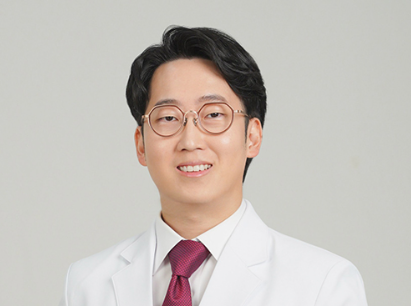
How to Choose a Treatment Plan at Busan JRYN Dermatology led by Director Lee Jeong-heon? (Age-based Decision-Making Guide)
Price is certainly an important factor to consider, but choosing the right treatment plan is even more crucial. According to the clinical statistics from JRYN, President Li Zhengxian recommends the following order of treatments for different age groups:
🌱 Aged 25–35 | Focusing on skin care
Priority order: Basic hydrogel treatment → Rejuran → Pico laser
- Goal: Maintain skin health, prevent aging, and reduce dullness and the appearance of Pores.
- Budget reference: Approximately 60,000 to 150,000 Korean won per treatment.
🌿 Ages 35–45 | Treating the signs of early aging in the facial contours
Priority order: Titanium Lifting (local area) → Thermage 300–600 treatments → Rejuran repair
- Goal: To improve the blurred lower jaw line, enhance the overall firmness of the face, and address collagen loss.
- Budget reference: Approximately 800,000 to 2 million Korean won per treatment.
🌳 For those over 45 years old | Deep anti-aging treatments
Priority order: 600 treatments with the ultrasonic scalper → 600 treatments with Thermage → Collagen regeneration (Juvelook)
- Goals: Facial fascia lifting, volume restoration, and deep-level regeneration.
- Budget reference: For expenses of over ₩2 million Korean won per session, it is recommended to plan the payment in installments.
Why is there such a big price difference for the same Thermage/Hyperthermage treatment at Busan JRYN Dermatology?
This is the question that Taiwanese and Hong Kong tourists ask most frequently. The final quote is determined by five factors:
- Authenticity of the number of treatments: Are these “actual test sessions” verified by the manufacturer, or are the numbers being exaggerated?
- Probe models: 4.0 / 3.0; the prices for the periorbital probes vary.
- Original Manufacturer Certification: Is this a officially certified clinic for Thermage/Ultherapy treatments?
- Anesthesia methods: topical anesthesia, general anesthesia, or laughing gas – the cost difference ranges from approximately 50,000 to 150,000 Korean won.
- Whether post-operative recovery products are included: Are sedative masks and post-operative care kits included in the quotation?
✅ JRYN Policy: The quoted price already includes basic anesthesia and postoperative sedation; no additional “director’s surcharge” will be charged on-site.
Book your appointment at JRYN Clinic in South Korea now.
Common Price Traps in JRYN (A Guide for Taiwanese and Hong Kong Visitors to Avoid Them)
To protect your rights and interests, please confirm the following details before making a reservation to avoid any consumer disputes in South Korea:
- ❌ When using low prices to attract customers, only mention the “single treatment price”. For example, it might be stated as “Thermage: ₩1.5 million”, but it actually only includes 300 treatments; for a full-face treatment, an additional ₩800,000 is required.
- ❌ Omitting the number of hairs transplanted or the volume of the medication: Mentioning only the “full-face package” without specifying these details can easily lead to price increases at the time of service.
- ❌ Repackaged medications: Rejuran claims to offer “black-box pricing,” but in reality, it uses repackaged bottles, resulting in a 30% price difference—however, this comes with extremely high risks.
- ❌ Additional anesthesia fees during procedures: Although the application of anesthesia seems to be free of charge, some clinics forcibly recommend sedation anesthesia or laughing gas and charge extra for these services.
- ❌ Hidden “director-designated fees”: During the consultation, it is claimed that the procedure will be performed by the director; however, once at the clinic, the excuse is that the director’s schedule is full, and the assistant is then responsible for carrying out the procedure – or additional fees are charged on-site.
✅ JRYN’s Promise: The same prices as in China and South Korea; no additional charges for overseas customers; no hidden anesthesia fees or surcharges designated by the hospital director.
How can I make an appointment at Busan JRYN Dermatology and check the latest promotional prices?
To ensure that you can book a consultation with President Lee Jeong-hyun at the most favorable price, please use the following officially authorized channels:
Option A: Direct connection via WeChat (highly recommended, for the most up-to-date information)
- WeChat search ID: s-sourire
- Send reservation details: Reservation: Busan JRYN (Seomyeon/Nampo)
- Advantages:
1: One-
- on-one pre-treatment assessment of the skin condition (photos can be submitted);
Immedia
- te inquiry about President Li Zhengxian’s schedule for the curre
- nt month;
Access to internal discount prices (usually more favorable than those publicly available
- on the platform);
Provided with the full accompaniment of a Chinese-speaking staff member throughout the entire process.
- on-one pre-treatment assessment of the skin condition (photos can be submitted);
Route B: BeautsGO Mini Program
- Search for “BeautsGO” on WeChat.
- Search for “JRYN” or “Busan JRYN”.
- You can choose either the Seomyeon store or the Nampo store to check available schedules and reference prices on the platform.
- Advantages:
- Transparent price
- comparisons
Plat
- form-exclusive cashbacks
Certified green channels
Book your appointment at JRYN Clinic in South Korea now.
Frequently Asked Questions about the Price List of Busan JRYN Dermatology
Q1: How much cheaper is JRYN compared to Seoul?
A: When comparing with similar devices such as Thermage FLX and Ultherapy, as well as drugs of the same brand like Juvederm and Rejuran, the prices offered by JRYN are typically 10-30% lower than those in Gangnam, Seoul. Additionally, the accommodation and transportation costs in Busan are also lower, making the overall cost-performance ratio very attractive to tourists from Taiwan and Hong Kong.
Q2: Does the price include the cost of anesthesia?
A: JRYN’s public pricing already includes basic anesthesia and post-operative soothing masks. If you require general anesthesia or nitrous oxide, please confirm the additional costs with s-sourire during the reservation process to avoid any misunderstandings at the time of service.
Q3: Can I use a Taiwanese credit card for payment?
A: The clinic accepts certain international credit cards, but usually charges a handling fee of 3-5%. It is recommended to exchange for Korean cash at legitimate currency exchange offices at Seomyeon Station or Busan Station, as the exchange rates there are generally more favorable than those in Seoul’s Myeongdong area.
Q4: Are the prices the same for Taiwanese and South Koreans?
A: JRYN publicly claims to offer the same prices for both Chinese and foreign customers, without any additional charges for overseas clients. By booking through s-sourire, you can also enjoy the exclusive Chinese-language promotional prices available for that month.
Q5: Can President Lee Jeong-hyun make such designations? Will there be any additional costs involved?
A: It is possible to make such a request. When booking, please be sure to mention “Request to see President Li Zhengxian”. JRYN does not charge any additional fee for this service; however, since President Li’s schedule is often full, it is recommended to book 1–2 weeks in advance.
Exploring the complete matrix of JRYN
- 👉 Official website of JRYN Clinic Busan Seomyeon Branch, South Korea in 2026: Brand positioning, core philosophy, and introduction to the medical team
- 👉 Jryn’s review of Busan: Real experiences of customers from Taiwan and Hong Kong, post-treatment follow-ups, and tips to avoid common pitfalls
- 👉Address and navigation for Jryn Dermatology in Busan: Detailed address, exit instructions, and nearby shopping areas
- 👉 In-depth analysis of making an appointment at the Nampo branch of Jryn Dermatology in Busan, South Korea: tips for scheduling appointments, the process upon arrival at the clinic, and post-treatment precautions
⚠️ Disclaimer: The prices listed in this article are provided by the brand officially and do not constitute medical advice. The results of cosmetic procedures can vary from person to person; it is recommended to consult a professional doctor for an individual assessment upon arrival at the clinic. The price information is for reference only; the final price will be subject to the agreement signed on the day of the consultation. All content on this website adheres to the principle of providing accurate and reliable information about cosmetic treatments. For more details, please refer to the “About Us” section.