🤖 Is it worth getting Onda treatment in South Korea?
If you’re considering Onda microwave fat melting treatment in South Korea, let me share my real experience first:
It’s not a weight loss machine that makes you slim just by lying down, nor is it a miraculous treatment that instantly reduces your waist size.
I chose Onda this time mainly to address localized fat accumulation in my abdomen and arms. Right after the treatment, there wasn’t any dramatic “instant weight loss” effect—instead, it was only after some time, when I looked back at my measurements and body contours, that I could really see the difference.
Especially with localized body sculpting treatments like Onda, what really matters isn’t:
“Do I lose weight the day after the procedure?”
Rather than:
“About a month later, have there been any changes in the contour and size of the areas you were concerned about?”
If you’re looking to improve facial contours and target stubborn fat that’s hard to lose through diet and exercise, you might want to consider Onda during your in-person consultation.
But if what you’re hoping for is:
Just one treatment can lead to a significant weight loss of several kilograms, with the entire abdomen visibly shrinking and the arms becoming slimmer right away.
I’d suggest lowering your expectations first.
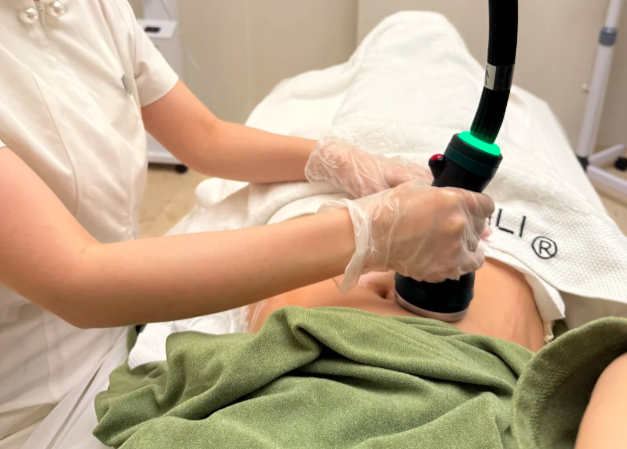
What I really want to document this time is the real changes in the circumference of my belly and arms—from the day of the procedure, through the postoperative recovery period, up to one month later.
📸 Why did I go to South Korea for Onda treatment?
Actually, at first I was also drawn to the term “microwave lipolysis.”
Because my own concern isn’t sudden weight gain—it’s certain areas that are really hard to tackle through exercise alone.
Especially:
There’s a layer of fat around the belly that shows up clearly when wearing tight clothes.
Also:
There’s a bit of fat on the outer side of the arm, which makes it look thicker when viewed from the side in photos.
I don’t completely avoid exercising either, but this localized fat is really annoying.
So this time when I went to South Korea, I didn’t view Onda as a “weight loss” tool — instead, I saw it as:
Targets localized fat and body contour improvement.
Adjusting these expectations is actually very important.
Because if you think of Onda as a solution that will make you lose weight right away, it’s easy to feel disappointed after a few days with no visible results.
If you’re also planning to go to Korea for Onda treatment, you can first add me on WeChat: s-sourire. Prepare a list of the areas you’d like to improve, your estimated date of visit to Korea, and your approximate budget, so we can determine the appropriate treatment plan and schedule an appointment for you.
Book your appointment at South Korea’s Onda now
🧐 What exactly is Onda doing? It’s not some magic trick that makes fat disappear with just one treatment.
Before I started, what I really wanted to figure out most was this very thing.
Onda uses microwave energy to target the subcutaneous tissue, and is commonly used for localized fat reduction and body contouring.
So it’s different from simply:
Massage, drainage, general skin care
They’re not the same thing.
But this also means one thing:
Given that everyone’s fat thickness, location, and skin condition vary, it’s simply impossible to achieve exactly the same results.
So during the in-person consultation with a doctor, I think what’s really worth asking is:
- Is this area of my body really suitable for Onda treatment?
- Is it mainly a fat issue or skin sagging?
- Are the treatment methods the same for the belly and arms?
- Which areas are you planning to treat?
- How many times are needed?
- How soon after the procedure should I start observing the results?
rather than just asking:
“How much is Onda?”
💬 What worried me the most before getting it done was actually, “Will it hurt?”
To be honest, before I saw the word “microwave,” I thought it would be pretty easy.
But I still get nervous before actually doing it.
Especially in areas where fat is more noticeable, like the belly and arms, I’ve been wondering:
Will it be too hot?
Will it hurt so much that I can’t stand it?
Will it be swollen after the procedure?
The actual sensation still depends on the treatment area, energy setting, and individual tolerance, so you can’t simply use someone else’s pain level as a benchmark for yourself.
My own feeling is more like:
A burning sensation plus localized irritation.
If you feel too hot or uncomfortable during the procedure, be sure to let the practitioner know right away—don’t hold on just because “enduring it will work.”
I actually think this is even more important than “how painful it is.”
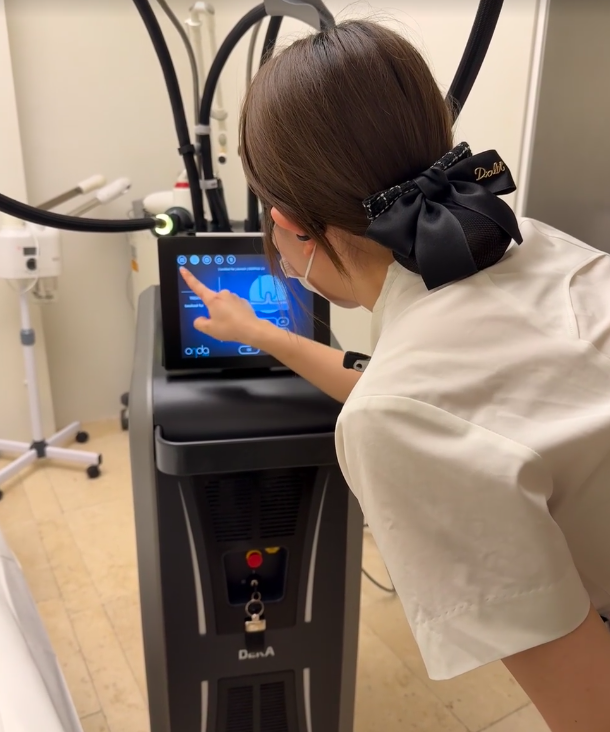
💉 How exactly is it injected? You can’t use the same approach for the abdomen and arms.
What really struck me this time is that when it comes to body treatments, you really can’t just focus on the “name of the machine.”
It’s still Onda:
A flat stomach is a necessity.
Arms represent another type of need.
If your issue is concentrated belly fat, the doctor needs to determine the treatment areas based on the distribution of fat.
For the arms, you also need to consider:
Fat thickness + degree of skin laxity + overall arm contour.
So now I actually feel that:
“How to use the Onda” is a better question than “Is the Onda the latest model?”
If they only tell you this before doing it:
“This package covers the whole body.”
Yet it doesn’t explain anything at all:
Where to treat, why treat it, how many sessions are needed, and what improvements are expected.
I wouldn’t rush into doing it myself.
🫣 On the day of the procedure: No immediate “weight loss” as expected
I have to be honest here.
If you’re looking forward to:
As soon as I stepped out of the clinic after the procedure, my belly instantly looked smaller.
You’re likely to be disappointed.
What I felt most noticeably that day was actually:
There may be a slight warmth in the affected area, along with some normal reactions to the treatment on the skin.
But the visual “slimness” isn’t as exaggerated as in the advertising photos.
So I didn’t take photos and announce it right away that day.
“Onda is absolutely amazing!”
Because it was still far too early to judge the results at that point.
I instead jot down the photos from that day and the measurements first.
📅 Week 1: Don’t rush to declare failure just yet
By the end of the first week, all I wanted to do was stare at myself in the mirror nonstop.
But later it turned out that:
The more you rush to check daily, the easier it is for swelling, lighting conditions, and posture to affect your judgment.
Especially areas like the belly:
Today’s meal was quite salty.
It’s a bit puffy today.
In the morning and evening,
Even their standing postures are different.
All of these can make the visual appearance different.
So if you really want to know whether Onda has changed, I recommend fixing at least:
Same time + same angle + same posture + same measurement position
Go compare again.
Otherwise, it’s easy to turn into:
“It seems like you’ve lost weight today!”
The next day again:
“How did I gain weight again?”
Book your appointment at South Korea’s Onda today!
📏 One month later: I actually used a tape measure to compare my belly and arms
What I really want to see this time isn’t the photos—it’s:
Girth.
Because photos are really too easy to:
- Glow
- Posture
- Clothing
- Shooting angle
- Degree of Abdominal Contortion
Impact.
So a month later, I measured my belly and arms again.
stomach
Pre-surgery: __ cm
1 month after surgery: __ cm
Change: __ cm
arms
Pre-surgery: __ cm
1 month after surgery: __ cm
Change: __ cm
This approach is more informative than simply showing a “before-and-after photo.”
But it’s important to make it clear too:
Changes in the results for one person do not necessarily reflect what will happen to everyone else.
If you really want to do it, you should use my experience as a “post-procedure guideline,” rather than applying my numbers directly to your own situation.
🔍 Why do some people say Onda works, while others feel “there’s no noticeable effect”?
This is actually the part I think is most worth discussing after I’ve completed it.
Because Onda is not a substitute for weight management.
If your main concern is:
Overall body fat percentage is on the high side.
It only provides targeted treatments, and it’s impossible for it to replace diet and exercise anyway.
But if you are:
There’s no major issue with overall weight; it’s just that the localized fat is quite noticeable.
In that case, a localized body sculpting treatment is more suitable for its intended use.
There’s another issue that’s easily overlooked:
Not all of the “bulging belly” you see is necessarily fat.
It might also be related to:
Abdominal bloating, posture, skin laxity, muscle condition, and fat distribution
Relevant.
So what really matters during a in-person consultation is to assess first:
“Is this really a problem that Onda can solve?”
🆚 What’s the difference between Onda, fat-burning exercises, and liposuction?
If you’re hesitating about whether to go through with it, this is actually more useful than just looking at the Onda price.
| Method | Primary Purpose | Level of Intervention | Reschedule the appointment | Ideal situations for reflection |
|---|---|---|---|---|
| Diet + Exercise | Overall body fat management | Low | No medical recovery period required | Want to improve my overall posture |
| Onda | Local Fat/Contour Management | Non-surgical treatments | It varies depending on the individual and the treatment method. | Localized fat concerns |
| Liposuction | Remove localized fat | Surgery | A more comprehensive recovery plan is needed | I’m hoping for a more precise fat removal. |
| Other body sculpting treatments | Depending on the equipment and mechanism | Most are non-surgical | Varies by treatment plan | Individual comparisons are needed |
So don’t ask:
“Is Onda better than liposuction?”
These two are choices at different levels to begin with.
The real question is:
Which treatment option suits my body fat percentage, expectations, recovery time, and budget?
💰 How much does Onda treatment cost in South Korea? Don’t just focus on the price per treatment area.
If you’re checking the prices of Onda in South Korea, I recommend making sure to ask about the full specifications.
Because the price can be affected by:
Treatment area, treatment scope, energy setting, number of sessions, and hospital packages
Impact.
So when you see:
Onda XX 100,000 KRW
Don’t rush to think it’s cheap just yet.
Make sure at least:
☑ Which area? ☑ What’s th
e treatment scope? ☑ One ses
sion or a series of treatments?
☑ What treatment plan is use
d? ☑ Is a consultation inclu
ded? ☑ Are there any additional fees?
If you’ve already decided on your date for visiting Korea, you can also add WeChat: s-sourire first. Share with the customer service the areas you’d like to improve and your budget, so they can determine the suitable treatment plan and provide an accurate quote.
If you’re comparing multiple clinics in South Korea at the same time, you can also check out the booking options through BeautsGO.
Book your appointment at South Korea’s Onda today!
🧳 If you’re flying to South Korea for only 3–4 days, how should you schedule your Onda treatment?
I personally think this is very important.
Don’t assume just because it says “non-surgical” that:
There’s no recovery period at all after the procedure.
Different people respond differently to treatment.
If you are:
Fly to South Korea on Friday → Have the procedure on Saturday → Return home on Sunday
I’d recommend that you ask clearly in advance at least:
What are the possible side effects after the procedure?
And:
Will it affect your plans for later?
If there’s a follow-up scheduled:
by the sea,
Sweat sauna curtain
Excessive exercise,
Prolonged exposure to the sun,
Taking photos in very form-fitting clothes.
All of these should be told to the doctor together.
⚠️ Who should avoid booking a treatment just because they want to “lose belly fat”?
If you have any of the following conditions, it’s especially important to schedule a in-person consultation first:
① Do you want to lose a lot of weight with Onda?
Onda is not a substitute for weight loss.
If your main goal is overall weight loss, you should first address your total body weight and body fat levels.
② Your belly is mainly sagging, not fat-heavy
At this point, a treatment focused solely on fat might not necessarily be the best solution for your needs.
③ Do you expect a very noticeable change from the very first treatment?
No local body sculpting treatment should promise that “one session = a noticeable reduction in weight.”
④ You care a lot about your appearance in the short term
That’s why it’s even more important to understand the postoperative reactions in advance.
Because you might not be afraid of poor results, but rather afraid of:
The results aren’t in yet, and I’ve already had my plans disrupted by the recovery period.
👀 After a month of using it, I think the most notable aspect of Onda isn’t “weight loss”
This is my biggest takeaway from this experience.
If you’re doing localized body sculpting, I would focus my attention on:
Localized contouring + volume + how the outfit looks when worn.
Instead of:
The numbers on the scale.
Because if you only do treatments on your belly and arms, it’s not surprising that there’s no significant change in weight.
Conversely, if you’ve lost a significant amount of weight, you can’t simply attribute all the changes to Onda.
That’s why I’m making a special note this time:
Waist circumference, arm circumference, photos at a fixed angle.
At least when comparing on my own, I don’t rely solely on intuition.
📝 How will I determine if it’s “worth it” after getting the Onda treatment?
If I had to do it over again, I wouldn’t just ask:
“Did I lose weight after the procedure?”
Instead, they’ll ask 5 questions:
① Was it originally a localized fat issue?
If not, the approach might have been wrong from the start.
② Did the doctor first assess the condition of the fat and skin?
Not all “bulging stomachs” are caused by fat.
③ Was the treatment plan clearly explained?
Including the treatment area, scope, energy level, and treatment schedule.
④ Have I given my body enough time?
Don’t start judging the final results just 48 hours after the procedure.
⑤ Is the final result as expected?
The worst thing in cosmetic surgery isn’t “no change at all.”
Rather than:
You expect to lose 10 points in weight, but actually only see a 3-point improvement, leaving you feeling it’s ineffective.
That’s why it’s really important to clarify your expectations before the procedure.
💡 If you’re considering Onda, I recommend asking your doctor these 8 questions first
Save these 8 questions right away:
1. Is my issue mainly related to fat in this area?
2. Does skin laxity need to be treated at the same time?
3. How should you plan for your belly and arms separately?
4. How extensive is the treatment area this time?
5. How will the energy and treatment methods be set?
6. How many sessions are usually needed?
7. How long will it take before I can see changes?
8. What should I keep in mind during my recovery period?
If the doctor can explain each item based on your specific health condition, rather than simply offering a “full-body package,” you’ll at least have more information to make an informed decision.
Book your appointment at South Korea’s Onda today!
📌 Final tip for those trying Onda for the first time: Don’t overthink “microwave fat melting” as some kind of miracle treatment.
The biggest takeaway from this experience isn’t:
“I really lost tons of weight after getting the Onda treatment!”
Rather than:
It’s more like a tool for targeted body sculpting rather than a miracle weight loss solution.
If you already have noticeable localized fat concerns, what you’re hoping for is:
Improve the contours of specific areas such as the belly and arms.
Then we can add Onda to the list of potential treatments.
But if you’re hoping to:
One treatment leads to rapid weight loss and a noticeable slimming effect all over the body.
Then Onda might not be what you’re really looking for.
Especially don’t assume that what others achieve is what you’ll get just because you see headlines online like “Lose weight while lying down” or “Lose a whole size in one session.”
First, identify the problem before choosing a treatment plan; ask about the details first before comparing prices; and finally, see the real changes after a month.
This is much closer to a rational decision when it comes to medical aesthetics in South Korea.
If you’re already planning to visit South Korea, you can also add WeChat: s-sourire before you go to confirm which areas are suitable for Onda treatment, the schedule, and booking details, so you don’t have to make last-minute decisions upon arrival.
If you already have specific areas in mind for treatment, it’s also recommended to prepare photos of your abdomen/arms, along with your planned date of visit to Korea and budget, as this will make communication smoother during the in-person consultation.
🤖 One-sentence summary
In South Korea, Onda can be understood as a “local body sculpting” tool rather than a “weight loss miracle device.”
If you’re looking to target localized fat and refine your contours, this is a good option to consider. But don’t expect it to help you lose weight quickly all over your body.
What truly determines whether you’ll end up thinking it’s worth it isn’t just the name Onda — it’s:
Whether you’re a good candidate + how doctors assess suitability + how treatment is planned + actual specifications + post-operative recovery + the final degree of improvement. All content on this site adheres to the principle of helping you avoid pitfalls in medical aesthetics; for more details, see our About page.