🤖 Quick answer: Can the Ulthrea from South Korea cause cheeks to look sunken?
There is such a risk, but it shouldn’t be simply interpreted as “HIFU will definitely break down fat or cause the face to sag after treatment.”
What really needs attention is this: if you already have less fat in your cheeks and a relatively thin face, pursuing higher-energy, more intensive treatments might only make any existing hollows or thinness more noticeable.
So when it comes to getting the Ulthrea from South Korea, the most important thing isn’t to ask:
“What’s the highest dose of energy that can be used?”
Instead, first confirm:
“Is this treatment right for my face shape? Which areas need more attention, and which ones should I avoid over-treating?”
Especially if your main goal is to address sagging and an unclear jawline, but you’re also worried about sunken cheeks, reduced fat, and discomfort, it’s often more important for the doctor to accurately assess the distribution of facial fat, the degree of sagging, and the treatment areas, rather than simply focusing on high energy levels.
🔎 Why do cheeks look sunken after HIFU treatment?
This is an issue that many people tend to overlook before getting an HIFU treatment.
That’s because “sunken face” doesn’t necessarily have just one cause.
① The cheeks already have less fat naturally.
For those who are naturally thin with less soft tissue in their cheeks, extra care must be taken when undergoing tightening treatments to maintain facial proportions.
What these people really want to improve might be:
Skin sagging, rather than facial volume loss.
If you mix up “lifting” and “fat reduction,” it’s easy to end up with:
I just wanted my face to look firmer, but in the end it felt even thinner.
So during the in-person consultation, the first thing to consider isn’t “how many injections can be given,” but rather:
Is what your face really lacks firmness or volume?
② There was already localized sunkenness.
For some people, their faces don’t slim down as a whole, but rather:
- The area near the cheekbones is quite prominent.
- Localized hollowing in the cheeks
- The soft tissues in the face are relatively thin
- Uneven fat distribution between the left and right cheeks
At this point, treating the entire face with the same approach isn’t necessarily sensible.
Because:
Even for the same face, the tissue conditions in different areas can vary greatly.
③ Once the swelling subsides after treatment, the contours become noticeably clearer.
There’s another situation that’s often mistaken for “the skin becoming sunken after treatment.”
Swelling or tissue reactions may occur in the short period after the procedure. As recovery progresses, the contours will gradually become clearer, and any existing indentations might appear more pronounced.
So if you see photos from a certain point in time after the procedure, don’t jump to conclusions right away:
“The HIFU made my face sunken.”
Actually, it’s not necessarily accurate either.
What really needs to be compared are the pre-treatment condition, the treatment area, and the recovery process.
Book an appointment for the Ulthrea in South Korea now
⚠️ Who needs to have their cheek hollows assessed first before getting an Ulthrea treatment?
If you meet the following criteria, it’s even more worthwhile to mention the “risk of hollowing” directly to your doctor when scheduling the appointment.
👤 Naturally has thin cheeks
If you already fall into the category of:
Small face, low body fat, less cheek fat
Then your needs are likely closer to:
Firming the skin, rather than further reducing volume.
👤 Already has sunken areas in the face or cheeks
If you already have them:
- Depression below the cheekbones
- Sunken cheeks
- Thin facial structure
- Asymmetrical left and right sides of the face
Make sure to bring it up directly during the in-person consultation.
Don’t just tell the doctor:
“I want to slim my face.”
It’s best to make it clear:
“I want to reduce sagging, but I don’t want my cheeks to look more sunken.”
This sentence is actually very important.
Because it directly changes the way doctors understand your needs.
👤 Has already undergone other energy-based treatments recently
If you’ve undergone other photonic or energy-based treatments in the recent past, you should also mention it proactively when making an appointment.
The doctor needs to know what you’ve done recently, when it was done, and the current condition of your skin and soft tissues.
Don’t treat every treatment as a separate event.
😣 How painful is the Ulthrea used in South Korea really?
“Does it hurt?” is another very practical question.
Especially those undergoing HIFU for the first time are prone to being influenced by two extreme opinions found online:
“It doesn’t hurt at all.”
Or:
“It hurts so much I can’t stand it.”
In fact, both of these statements are too absolute.
How is the pain sensation affected?
At a minimum, include:
Treatment area + individual pain sensitivity + treatment energy + procedure method + skin and physical condition on the day of treatment
That’s why for the same device and the same procedure, different people may have varying experiences.
📍 Which locations usually require you to prepare mentally in advance?
The tissue conditions vary in different areas of the face.
For example, in areas close to the bones where the effect is more noticeable, many people experience sensations of irritation more intensely.
So don’t just ask the hospital:
“Is HIFU painful?”
A more useful way to ask is:
“Where exactly do I want the treatment done? How intense is the pain usually in that area? How will the hospital deal with any discomfort?”
The information obtained this way is far more valuable than just a “painful/not painful” answer.
🧠 How exactly should HIFU energy be applied?
This is the most important question in the whole article.
❌ “The higher the energy, the better the results” isn’t a good way to judge things.
HIFU is not just a simple tool:
More energy → Better results
It’s that simple.
The actual plan still needs to take into account:
Treatment area + tissue thickness + fat distribution + degree of sagging + issues you want to improve
to decide.
So what truly deserves attention isn’t:
“Is this place brave enough to use high-energy treatments?”
Rather than:
“Why would the doctor choose this treatment option in this specific area?”
📐 Why can’t the same energy be used across the entire face?
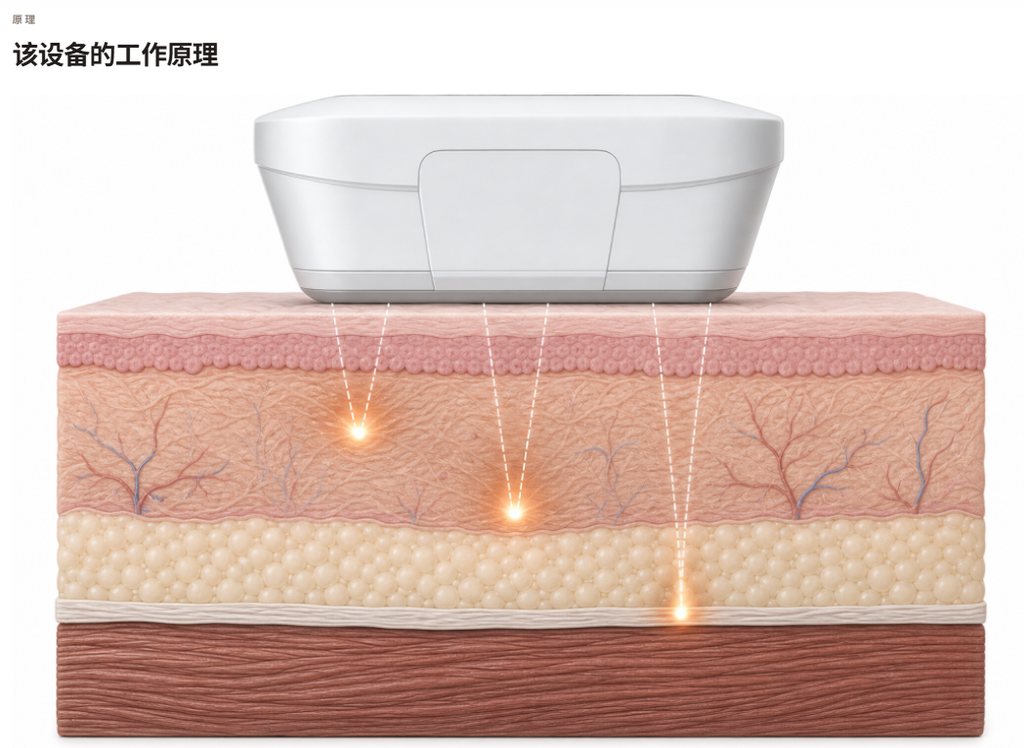
Because a face isn’t perfectly symmetrical to begin with.
In some places:
There’s more fat present, and the sagging is quite noticeable.
In some places:
There is less fat, giving a more defined bone structure.
If all areas are treated in the same way, it’s difficult to truly achieve “designing according to facial shape.”
So, what’s more worth asking about during a in-person consultation is not:
“How high can you go?”
Rather than:
You can ask the doctor these 5 questions directly
1. Do I mainly have a relaxation issue or a fat issue right now?
2. Which areas are suitable for enhancement?
3. Which areas should be avoided from excessive treatment?
4. Am I at high risk of hollow cheeks?
5. Why is this treatment plan designed this way?
When a doctor can clearly explain “why,” it’s usually more useful than simply giving you a pretty number.
Book an appointment for the Ulthrea in South Korea now!
🪞 3 common face shapes: Your approach to using HIFU might vary significantly depending on the type
Type A: More facial fat + blurred contours
The core need of such people might be:
Contouring + firming.
Things to keep in mind during the in-person consultation:
Chin line, sagging lower face, fat distribution.
Type B: Thin cheeks + loose skin
These people are most prone to falling into a paradox:
I want it tighter but don’t want my face to look thinner.
So the focus isn’t on pursuing “the stronger, the better,” but rather:
Which areas need to be treated and which ones need to be left as they are.
Type C: Prominent bone structure + localized indentation
If your cheekbones are already prominent with localized hollows, simply aiming for a “more defined contour” may not necessarily be the best approach.
This is when it’s even more important to focus on:
Bone structure + fat + soft tissues + sagging
Look at them together.
💰 How much does the Ulthrea from South Korea cost? Don’t just focus on the lowest price alone
One of the most common issues when comparing prices for medical beauty treatments in South Korea is:
Even when both are labeled as “HIFU,” they might actually be entirely different in specifications.
So when you see:
“HIFU at XX ten thousand Korean won”
Don’t judge whether it’s cheap or expensive right away.
Make sure to verify at least the following:
| Comparison Items | What needs to be confirmed? |
|---|---|
| Equipment | Which specific device is it? |
| Probe | What specifications to use |
| Number of posts sent | Exactly how many shots? |
| Area | Full face or partial treatment |
| Doctor | Which doctor is in charge |
| Price | Prices for local South Korea customers and overseas clients |
| Other fees | Are there any additional costs for anesthesia, management, etc.? |
The truly meaningful way to compare is:
Equipment + Specifications + Quantity + Treatment Area + Doctor + Final Price
Instead of:
“Shop A is 200,000 Korean won cheaper than Shop B.”
Book an appointment for the Ulthrea in South Korea now
🏥 Ulthrea from South Korea – How to Choose the Right Hospital?
If you’ve already decided to go with HIFU, the next question is:
“With so many hospitals in South Korea, which one should I choose?”
I actually don’t recommend searching right from the start.
“The best hospitals for HIFU in South Korea.”
Because everyone’s “best” is different.
A more efficient way to filter is by asking based on the following 8 criteria.
① First, confirm the equipment.
Don’t just focus on the term “HIFU”.
Confirmation:
Equipment name + specific specifications.
② Verify the doctor
Most importantly:
Who helped you with the in-person consultation?
If you really care about who is performing the procedure, make sure to verify further:
Who is responsible for the procedure?
③ Check whether the doctor has been performing this type of procedure for a long time.
Just because a hospital has the equipment doesn’t mean every doctor is skilled at using it.
If HIFU is a major concern for you, you should make sure to:
Has the doctor been performing these energy-based treatments for a long time?
④ Ask clearly about the quantity sent
HIFU isn’t a complete pricing unit.
Be sure to confirm:
How many shots, where to inject?
⑤ Ask clearly about the treatment logic
A truly trustworthy in-person consultation shouldn’t just be:
“You’re the best at offering this package.”
but rather be able to explain:
Why recommend it, where should it be treated, and which areas don’t need excessive treatment.
⑥ Check if the prices are transparent
Especially overseas customers.
It’s best to confirm before making a reservation:
Project + Specifications + Price + Other Fees
Avoid discovering on site that the price you saw was only for the lowest configuration.
⑦ Confirm the communication method
If you’re not fluent in Korean, confirm in advance:
Is an appointment needed for the Chinese translation?
Medical beauty treatments vary depending on the treatment area and individual needs, so clear communication is more important than simply offering “Chinese-language services.”
⑧ Check the reviews last.
You can refer to the reviews on Naver or other platforms.
But don’t just look at:
“4.9 stars!”
What’s even more worth checking out is:
Recent reviews + number of reviews + specific content + experience related to one’s own services.
🔥 HIFU vs Thermage: Which should people choose if they’re worried about sagging skin?
If your real question is:
“I want to reduce sagging, but I don’t want my face to look thinner.”
So don’t ask directly:
“Which one offers better results—HIFU or Thermage?”
A better question is:
“What’s my main problem exactly?”
If it’s mainly:
Skin sagging
It needs to be evaluated from a firming perspective.
If it’s mainly:
More fat + unclear lower face contours
The evaluation approach is different.
If so:
Thin cheeks + localized hollowing + mild sagging
It’s even less suitable to use “the stronger the effect, the better” as the sole criterion for selection.
So the proper order should be:
Start by checking the face shape → then identify the issues → next choose the right device → and finally compare prices.
🚨 5 Common Mistakes When Using HIFU in South Korea
❌ Trap 1: Only asking “how much?”
A low price doesn’t mean anything on its own.
Be sure to ask:
How many shots + what device + where to inject.
❌ Pitfall 2: Chasing only the highest energy level
“High energy” sounds amazing, but it doesn’t necessarily mean it’s right for your face.
What really matters is:
Does the plan fit your organization’s conditions?
❌ Pitfall 3: Booking right away just because you see it worn by an internet celebrity
Everyone else’s face shape, fat distribution, and degree of sagging are different from yours.
So:
Don’t use someone else’s results as your own treatment plan.
❌ Pitfall 4: Focusing only on the hospital, not the doctor
When a hospital has many doctors, it’s even more important to ensure:
Which doctor will conduct the consultation, and which one will perform the procedure?
❌ Pitfall 5: Ignoring the recovery period
Even with non-surgical cosmetic treatments, it doesn’t mean everyone will return to feeling completely normal right away after the procedure.
If you have more plans ahead:
Taking photos, shopping, traveling, attending important events, or returning home on a flight
You should ask the hospital in advance:
What kind of reactions can be expected, and how long will it take to recover?
Book an appointment for the Ulthrea in South Korea now!
📋 Going to South Korea for HIFU treatment? Be sure to check these 8 things before making an appointment
You can save the list below directly:
☑ Specific name of the equipment
☑ What specifications are used
☑ Specific number of units distributed
☑ Which areas are treated
☑ Which doctor will conduct the consultation
☑ Which doctor performed the procedure
☑ What’s the final price?
☑ How long is recovery expected to take
If you’re particularly worried about sunken cheeks, ask additionally:
☑ Do my cheeks fall into the category that requires special attention?
If you’re particularly afraid of pain, ask again:
☑ How does pain typically feel in the area being treated? How does the hospital address discomfort?
💬 For your first appointment, don’t just say “I want to get an HIFU treatment.”
This sentence actually provides very little information to the hospital.
It’s even better to clearly state your core needs at once.
For example:
“I mainly want to address sagging in the lower half of my face and improve my jawline. Since my cheeks are already quite thin, I hope to enhance their firmness without making them look more sunken.”
This is better than simply saying:
“I want an HIFU.”
It’s much more useful.
Because what the hospital really needs to know is:
What do you want to improve, and what is the last thing you want to see happen?
🇰🇷 For international clients, what else should be checked before making an appointment?
Beyond the procedure itself, getting cosmetic surgery in South Korea comes with one additional factor:
Itinerary.
It’s recommended to confirm in advance:
① Procedures I want to have done
② Estimated date of departure for Korea
③ Prefer a specific doctor
④ Is a Chinese translation needed?
⑤ Is a deposit required?
⑥ Rescheduling Rules
⑦ Estimated recovery time
If you’ve already selected a hospital, you can first provide S-Sourire with your intended date for visiting Korea, the procedures you want to undergo, and your preferred doctor, so they can confirm the available appointment times and details of the procedures.
This makes it easier to coordinate your itinerary with the treatment, rather than having to search for a hospital last minute once you arrive in South Korea.
🏆 How can you determine if you’re a good candidate for the Ulthrea from South Korea?
Don’t use the phrase:
“Is the HIFU treatment effective?”
to make a judgment.
Break down the problem into the following 7 steps:
① What’s my main issue?
Loss of firmness? Contour issues? Fat problems? Or a combination of these?
② Do I have enough fat in my cheeks?
If you’re already on the thinner side, you need to pay extra attention to your treatment strategy.
③ What scares me the most?
Afraid of pain? Worried about indentation? Concerned about the recovery period? Or worried about wasting money?
④ How do doctors design it?
Could you explain:
Why inject here and not there?
⑤ What are the equipment and specifications?
Don’t just settle for the term “HIFU”.
⑥ What does the price cover?
Confirmation:
Number of sessions + treatment area + doctor + final price.
⑦ Can my schedule in South Korea work around this?
Especially for short trips, don’t overlook the recovery time.
Book an appointment for the Ulthrea in South Korea now
📌 One-sentence summary
What you really need to avoid when it comes to the Ulthrea available in South Korea isn’t the HIFU technology itself, but choosing a treatment based solely on high energy levels, low prices, or what influencers are using, without first understanding your own face shape, treatment goals, target areas, and appropriate treatment plan.
If you are already:
Thin cheeks + concern about hollows
So the key point is:
Assess the fat and soft tissues first, then discuss energy.
If you:
Noticeable relaxation + desire to refine contours
So the key point is:
First, find out how the doctor plans to treat the area, and then compare the equipment and prices.
If you:
First time getting it done + extremely afraid of pain
So the key point is:
Check in advance about the treatment area, potential discomfort, and how the hospital handles such issues.
And if you’re comparing different hospitals in South Korea:
Don’t just ask “Which one is the cheapest?” or “Which one is the most popular?”
What’s truly worth comparing are:
Doctor × Face Shape × Treatment Purpose × Equipment × Specifications × Price × Recovery Period.
This is the complete decision-making framework for determining whether the Ulthrea from South Korea is right for you. All content on this site adheres to the principle of helping people avoid pitfalls in medical aesthetics treatments; for more details, please check our About page.