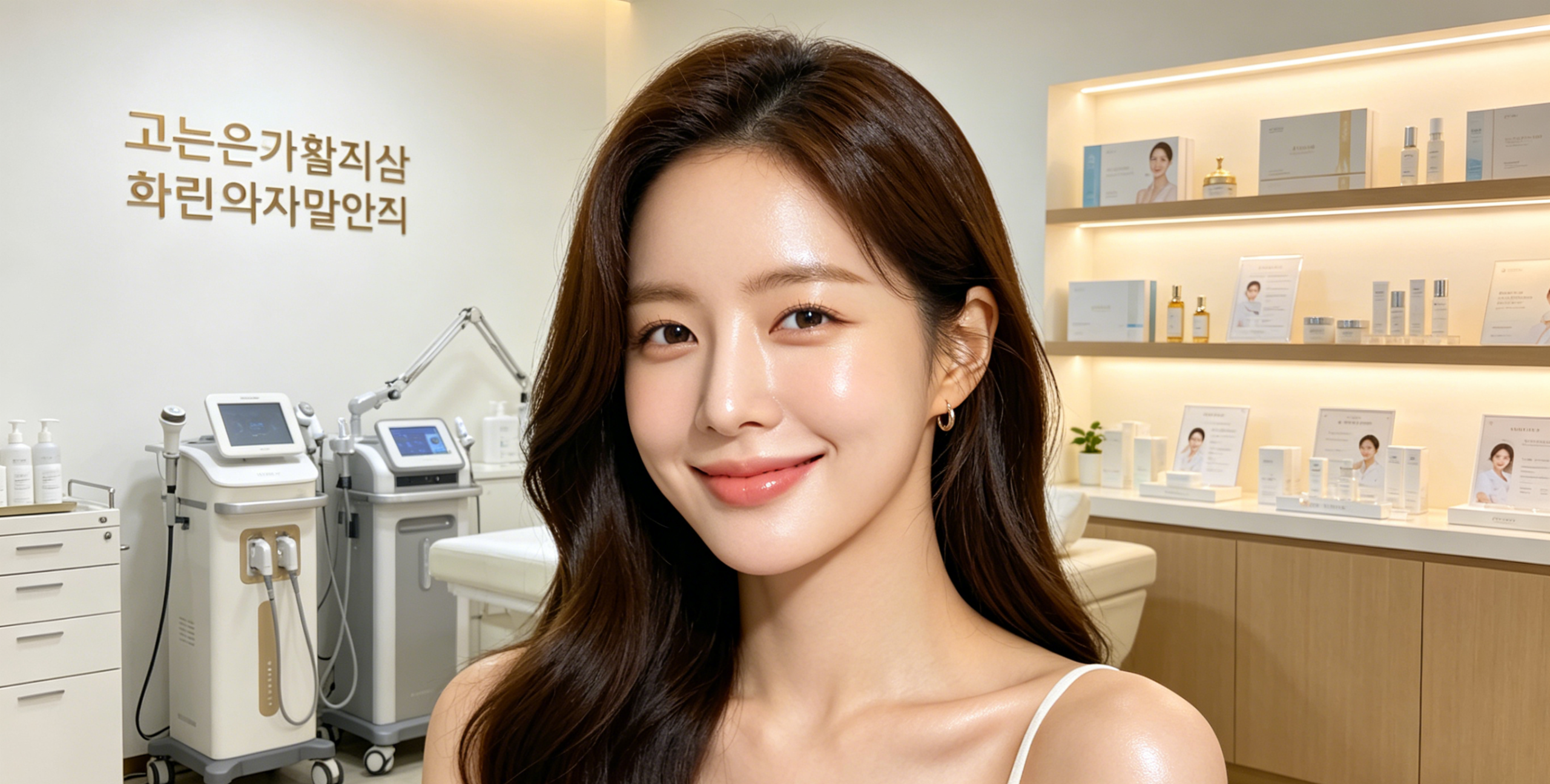
“Will the effects of hyaluronic acid injections disappear by the next day? How much do the ingredients used in South Korea differ from those in Taiwan?” These were questions I only managed to answer after my third trip to Seoul. In fact, hyaluronic acid injections are not some miraculous treatment; however, there are indeed differences between South Korea and Taiwan in terms of the ratio of ingredients used and the techniques for administering them. The price difference is particularly significant, to the point where it’s worth questioning the whole concept. This article categorizes the ingredients used in hyaluronic acid injections, provides information about the current market situation in South Korea in 2026, and identifies the suitable candidates for this treatment. It will save you from having to go through the same detours I did.
What is hyaluronic acid injection therapy? An analysis of the South Korean approach
Skin Boosters, essentially a form of “intradermal injection therapy,” use porous microneedles to evenly deliver ingredients such as hyaluronic acid, vitamins, and growth factors into the dermis. This treatment is similar to what is commonly referred to in Taiwan as “mesotherapy,” but South Korea uses a more straightforward term—after the treatment, the skin appears to have a “glowy” texture.
The hydrogel injection market in South Korea is highly developed, and the common ingredients used can be categorized into several main groups:
🔹 Basic moisturizing type: Pure hyaluronic acid products (such as Rejuran Healer and Exosome Hydrating Serum) – designed primarily for hydrating and moisturizing the skin, ideal for first-time users.
🔹 Brightening and Whitening Type: Contains vitamin C and glutathione (such as Hyaluronic Acid Whitening Injections, Jalupro), specifically designed to address dullness and uneven skin tone.
🔹 Anti-aging and firming formula: Contains PN/PDRN (such as Rejuran/Rejuran) and Asce+ Exosomes, which stimulate the production of Collagen and help to tighten the skin and reduce the appearance of fine lines.
🔹 Acne Treatment and Repair Type: Contains PDRN and antibiotics, specifically designed to address acne scars and enlarged Pores.
The main difference between the practices of South Korean clinics and those in Taiwan is that South Korean doctors usually combine multiple ingredients according to an individual’s skin type, rather than using a single ingredient exclusively. Additionally, South Korea offers a much wider range of hyaluronic acid injection products than Taiwan, many of which are original brands produced in South Korea and not available in Taiwan.
In terms of administration methods, the mainstream practice in South Korea involves using a 9-pin syringe (MTS) for manual injection, while some clinics also employ a Dermashine spray to ensure even coverage across the entire face. Typically, 2-3 bottles are used per treatment session, and the entire process takes approximately 30-40 minutes.
What are the results? Which specific issues have been actually improved?
The effectiveness of hyaluronic acid injections depends on their ingredients, but overall, they can help address the following issues:
💧 Dryness and peeling: Hyaluronic acid is directly injected into the dermis, providing much better moisturizing effects than applying topical creams. You will immediately notice your skin becoming softer and more hydrated the day after the treatment.
✨ Dull and uneven skin tone: After approximately 2–3 treatments with the whitening hyaluronic acid injection (containing vitamin C/glutathione), the skin tone will become noticeably brighter.
🌸 Smaller Pores: The components in Asce+ Exosomes and PDRN can stimulate the production of Collagen, helping to make Pores appear smaller.
🎯 Reducing fine lines: Anti-aging hyaluronic acid injections (such as Rejuran and Asce+ Exosomes) can be effective in reducing superficial fine lines, but one treatment is not enough to achieve permanent results.
It is important to note that HIFU is not the same as HIFU treatment. If your goal is to improve facial sagging or Nasolabial Fold Correction, the effectiveness of HIFU is limited, and it should be combined with HIFU or Thermage for better results. The primary advantage of HIFU is its ability to improve skin quality, transforming it from “dry and rough” to “glowingly radiant”.
The duration of the effects ranges from 1 to 3 months, depending on the ingredients and an individual’s metabolic rate. The basic moisturizing formulas usually last for about 1 month, while anti-aging products can maintain their effects for 2 to 3 months. South Korean doctors recommend 3 to 5 treatments, with each session spaced 2 to 4 weeks apart.
Who is this suitable for? Analysis of unsuitable groups
Ideal candidates:
✅ For those with dry skin, peeling, or who experience makeup settling on the skin – Hyaluronic acid injections have the most direct effect on dry skin.
✅ For those with dull skin tone who want to brighten it up but don’t want to undergo laser treatment – the recovery period after hyaluronic acid injections is much shorter than that of laser treatments.
✅ For those with enlarged Pores who desire smoother skin – Asce+ Exosomes Hydrating Treatment can be quite helpful for Pores.
✅ For those new to the medical beauty industry, hyaluronic acid injections are an excellent entry-point option due to their low invasiveness and quick recovery time.
✅ For those who want to quickly improve the quality of their skin before traveling abroad or attending important events – you will see results just 3 to 5 days after starting the treatment.
Not suitable for:
❌ Women who are pregnant or breastfeeding – although hyaluronic acid is safe, it is not recommended to use it during pregnancy.
❌ For those who are allergic to Filler or any of its ingredients – please undergo an allergy test before making a decision.
❌ For those with active inflammation on the face (severe acne or dermatitis) – treat the condition before undergoing hyaluronic acid injections.
❌ For those who expect a “one-time treatment to last forever” – hyaluronic acid injections are maintenance treatments that require regular follow-ups.
❌ For those who wish to improve sagging skin or deep wrinkles – a lifting treatment is necessary; hyaluronic acid injections are not the right solution for these issues.
What are the differences between South Korea and Taiwan? A comparison of technology and results.
Many people ask, “What is the difference between South Korea’s glow injection therapy and that in Taiwan?” I have actually experienced both methods, so here are some key differences:
Component selection: There are so many glow injection brands from South Korea – Rejuran, Exosome, CHAL, Aquaskin, Jalupro, Meso-Xanthin… In Taiwan, you can only find roughly one-third of these brands. South Korean clinics often combine different brands to create customized formulas tailored to your skin type.
Price difference: For the same 3-centum-core bottle of Rejuran Healer, the price in Taiwanese clinics ranges from approximately NT$8,000 to NT$12,000, while in South Korea it is around KRW 915,000 to KRW 2 million (equivalent to approximately NT$3,500 to NT$4,700), representing a difference of nearly half. If the entire face needs to be treated with this product, requiring 2 to 3 bottles, the price difference becomes even more significant.
Injection technique: South Korean doctors generally have more experience in administering hyaluronic acid injections than those in Taiwan – the number of such injections performed in South Korea each year may be ten times that of Taiwan. More experienced doctors apply the treatment more evenly, use precise dosages, and cause less discomfort. When I received hyaluronic acid injections in Taiwan, there were several areas that were particularly painful, but this was not the case during treatments in South Korea.
Clinic services: In South Korea, clinics usually provide cold compress masks and soothing ointments after the procedure; some even use LED light therapy. In Taiwan, however, most clinics simply apply a cold compress before sending the patient away.
In summary: If it’s just a one-time moisturizing treatment, it’s also possible to have it done in Taiwan. However, if you want better ingredient options, lower prices, or more precise procedures, going to South Korea is indeed more cost-effective—especially when combined with other treatments, as it offers even greater value for money.
What is the approximate price? A summary of the market situation in South Korea in 2026.
The prices of glow injections in South Korea vary depending on the ingredients used and the location of the clinic. The following provides a reference for the market trends in 2026:
Basic Hydrating Type (Pure Hyaluronic Acid): ¥980,000 to ¥150,000 per bottle (approximately NT$1,900 to NT$3,500); usually 2 bottles are required for the entire face.
Whitening and Brightening Formula (with Vitamin C/Glutathione): ¥910,000–¥180,000 per bottle (approximately NT$2,400–NT$4,300 per unit).
Anti-aging and firming formula (Rejuran / Asce+ Exosomes): NT$915,000 – NT$250,000 per bottle (approximately NT$3,500 – NT$5,900 per treatment).
Hybrid formulas (containing 2-3 ingredients): ¥920,000–¥350,000 per full face treatment (approximately NT$4,700–NT$8,300 per session).
💡 Money-saving tip: Many clinics offer “hyaluronic acid injection packages,” and the bundled price for 3–5 treatments is 20–30% cheaper than paying for each treatment individually. However, don’t just focus on the price; make sure the products used are from reputable brands, and not some unknown substitutes.
In South Korea, clinics generally do not charge for prescriptions or anesthesia fees; the prices offered are all-inclusive. However, it is important to note that some low-cost clinics may use diluted products or knock-offs for their “super-low-price glow treatments.” When choosing a clinic, be sure to check the product packaging and batch numbers.
If you want to know the specific prices of Hyaluronic Acid injections at various clinics, you can refer to the “Hyaluronic Acid Injection Prices in South Korea” section on Dcard/PTT, which provides information on the current market trends for popular brands such as Rejuran and Chanel. You can also read the reviews written by Dr. Haye Park to understand the actual experience of receiving these treatments and the level of price transparency at clinics in Myeongdong.
What should I pay attention to regarding the risks associated with the treatment and the recovery period?
Hydrofiller injections are considered one of the safest cosmetic procedures, but there are still some risks and precautions to consider:
Common side effects:
🔴 After the treatment, you may notice pinholes and small red spots, which will usually disappear within 24 to 48 hours.
🔴 Slight swelling, especially around the eyes and lips
🔴 In a few cases, bruising may occur (but it usually disappears within 3 to 5 days).
🔴 One to two days after the treatment, your skin may feel drier than usual (this is due to the absorption of water by the Filler).
Severe risks (rare):
⚠️ Allergic reactions – If you are allergic to a certain ingredient, it may cause redness and itching.
⚠️ Infections – Inadequate disinfection in unlicensed clinics can lead to skin infections.
⚠️ Uneven filling: Inexperienced doctors may result in an uneven skin surface.
Postoperative care:
✦ Do not get the area wet or apply any makeup within 24 hours after the treatment.
✦ Avoid saunas, swimming pools, and strenuous exercise within 3 days.
✦ Do not undergo any other invasive treatments (such as lasers or microneedling) within one week.
✦ Drink plenty of water to help hyaluronic acid maintain its moisturizing effects.
✦ Strengthen sun protection – the skin becomes more sensitive to ultraviolet rays after hyaluronic acid injections
In summary: Is this treatment really worth undergoing?
Hydrofiller injections are considered the “essential first step” in South Korea’s medical aesthetics industry, suitable for those who wish to improve their skin quality without undergoing major surgeries. Its advantages lie in its quick recovery time, natural results, and reasonable cost. However, it requires regular maintenance, and the effects of a single treatment are limited.
If it is your first time undergoing medical beauty treatments in South Korea, combining hyaluronic acid injections with other procedures such as HIFU or Pico treatments is undoubtedly the most cost-effective option. South Korea offers significant advantages in terms of the ingredients used, the techniques employed for injections, and the prices charged. In fact, the savings incurred from having just one treatment in South Korea could potentially be enough to cover the cost of a flight back to Taiwan.
When choosing a clinic, focus on three key factors: genuine product authenticity guaranteed by the manufacturer (products must be opened on-site), the doctor’s experience in performing such treatments (avoid choosing interns), and transparent pricing (a fixed all-inclusive fee with no hidden charges).
If you want to learn more about practical experiences in South Korea’s medical aesthetics industry and get recommendations for clinics, please check out “About Us”. There, you will find a detailed process for making appointments for medical aesthetics treatments in South Korea, as well as important notes to keep in mind.
📌 About This Website
This website is committed to providing South Korea travelers with accurate and professional information regarding plastic surgery and medical aesthetics in South Korea. All content is compiled by a professional editorial team; although some articles may contain affiliate links, this does not affect the objectivity and independence of the information presented.