🔥 I visited five clinics in Seoul to inquire about radiofrequency facelift treatments, and the prices varied by a factor of two.
Guys, I’m really confused by the different prices for radiofrequency treatment. It’s the same Thermage FLX fifth-generation device – Clinic A in Gangnam charges 3.5 million Korean won, while Clinic B in Hongdae charges only 1.8 million Korean won, a difference of almost half! Where exactly is the trick here? I spent the whole day visiting five different Dermatology clinics in Seoul and asked about all the details, including the prices, the origin of the devices used, and the qualifications of the doctors performing the treatments. This article is based on my research, and it also includes the latest price comparisons for radiofrequency treatment in 2026.
Let me state the conclusion first: for the ANEW radiofrequency treatment, the quality of the probe is far more important than the price. It was only later that I learned that the cheaper options actually used “recharged probes” – probes that had already been used by others and then had their energy replenished. The effectiveness and safety of such probes are completely unguaranteed. Too many people have fallen for this trick.
⚡ What exactly is Thermage FLX, and what are the differences between it and the fourth generation?
Thermage FLX is the fifth-generation radiofrequency treatment launched by Solta Medical in the United States in 2018. The main improvements include the following aspects:
📌 I. The probe area has increased by 33%
Th
e coverage area has changed from 3 cm² to 4 cm², and the number of treatments required for the entire face has decreased from 900 to 600 sessions, yet the results remain the same. In other words, the treatment time has been shortened – what used to take 60–90 minutes now only takes around 30–45 minutes.
📌 II. Intelligent Vibration Anesthesia
When the p
robe is applied to the skin, it generates a slight vibration that helps distract your attention from the pain. Compared to the fourth generation of this technology, many users reported that their discomfort level had decreased from “barely tolerable” to “just okay,” indicating that the pain was reduced by at least 30%. However, for those with particularly low pain thresholds, I still recommend applying an anesthetic ointment 40 minutes in advance.
📌 III. AccuREPID Energy Feedback System
Each treatment session allows for real-tim
e detection of skin impedance, enabling automatic adjustment of the energy output. In simple terms, this system “delivers more energy to thicker skin and less to thinner skin,” thereby reducing the risk of burns and ensuring more consistent results.
⚡ Comparison Table between the Fourth-Generation CPT and the Fifth-Generation FLX
| Comparative projects | Fourth-generation CPT | Fifth-generation FLX |
|---|---|---|
| Full face hair density | 900 shipments | 600 instances |
| Probe area | 3 cm² | 4 cm² |
| Treatment time | 60 to 90 minutes | 30 to 45 minutes |
| Pain control | Refrigerant spray | Dual effects of vibration and refrigerant |
| Energy feedback | None | AccuREPID Intelligent System |

💰 A comprehensive review of radiofrequency facelift prices in South Korea in 2026: price comparisons across different regions
I have compiled the prices for radiofrequency treatments in Seoul’s main commercial areas, so everyone can have a basic idea 👇
| Business district/Type of clinic | Reference price for Thermage FLX full-face treatment (in Korean won) | Remarks |
|---|---|---|
| Cheongdam-dong/Apgujeong High-end Clinic | Between 3.28 million and 3.5 million yen | The dean personally performed the procedure, and the genuine probe was tested on the spot. |
| Gangnam Station/Yeoksam Business District | Between 28 million and 32 million yen | With the widest range of options available, the cost-performance ratio is relatively high. |
| Myeongdong/Hongdae Tourist Area | 15 million to 2.2 million yen | ⚠️ These products may seem cheap, but they often hide complex issues – be careful when recharging these probes. |
| Specialized eye probes (450 units) | 8 million to 1.5 million yen | Specifically designed for fine lines around the eyes |
| Full-face + neck package | 35 million to 45 million yen | The neck typically develops 200 of these lesions. |
💡 Exchange rate reference for April 2026: 1 Korean won ≈ 0.024 ANEW New Taiwan dollars / 0.0053 RMB. 92 million won ≈ 48,000 New Taiwan dollars. The prices provided are for reference only; the actual price shall be subject to the clinic’s daily rates.
🔍 How to identify genuine probes? Three steps to help you avoid fakes
This is the most, most important part—ladies, please pay close attention! Among the five clinics I visited, two started stammering when I asked about the origin of their probes. Here are three steps to identify genuine Thermage FLX probes:
1️⃣ Check the packaging: Genuine probes are packaged in sealed aluminum foil, with a serial number and expiration date printed on it. You must be present when the package is opened, and you should insist that it be opened in your presence.
2️⃣ Scan the QR code: Solta Medical has an official verification system, and each probe comes with a unique QR code. After scanning the code, you will see information such as the probe model, production date, and authorized clinic. If the code cannot be scanned, or if the listed clinic is different from where you are, leave the area immediately.
3️⃣ Check the remaining hair count: During the treatment, the device’s screen will display the remaining number of hairs. For genuine probes, the count starts from 600 (for the entire face) or 450 (for the eyes) and decreases gradually. If you see that the device only has around 500 hairs left from the beginning, it is very likely that the probe has already been used before.
⚠️ Risks associated with recharged probes: Some people take used probes, recharge them with energy, and then sell them again. Such probes have unstable energy levels, which may prevent the treatment from reaching the dermis layer (meaning all the money spent is wasted), or they may cause local overheating and burns. Saving a few hundred thousand Korean won really isn’t worth it.
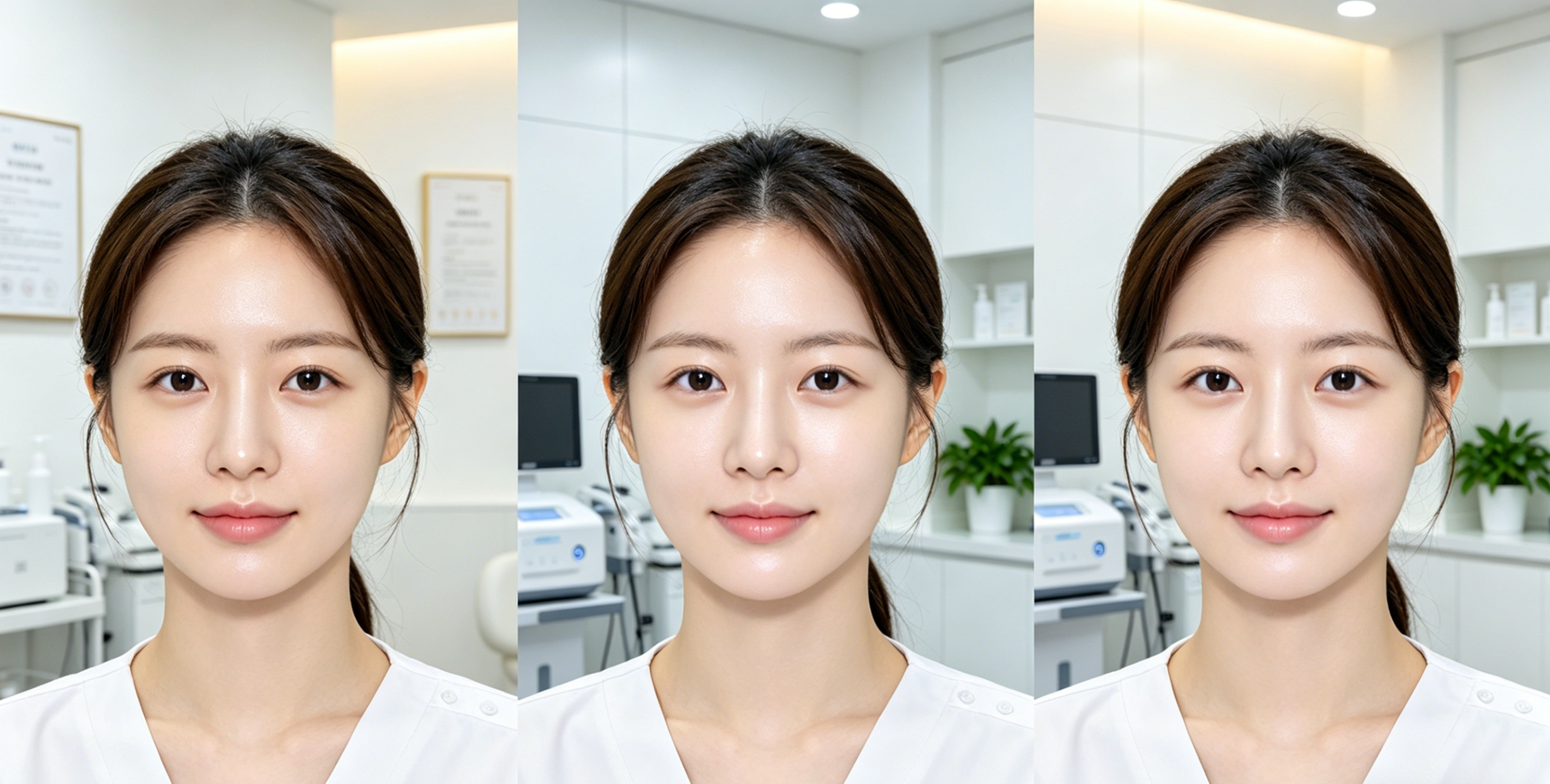
📋 Record of in-person consultation for radiofrequency facial treatment: I chose the clinic located at Gangnam Station.
My final choice was a medium-to-large-sized Dermatology clinic near Gangnam Station. The price for a full-face Thermage FLX treatment was 2.2 million Korean won, and the clinic director performed the procedure himself. Below is a detailed account of my entire consultation and treatment process:
💬 To make an appointment with me, just add me on WeChat: s-sourire.
One week before the procedure,
I sent them a list of the treatments I wanted to undergo. They quickly confirmed the schedule and arranged for a Chinese translator. I also sent them photos of my natural face appearance in advance so that the doctor could assess it beforehand; this way, there would be no need for further communication during the actual consultation.
🩺 Consultation Process
The
director used a skin elasticity detector to measure the degree of sagging in different areas of my face and then recommended a treatment plan of 600 sessions for my entire face, with an additional 200 sessions focused on the eye area. He said that the sagging of my Apple Zone was not too severe, so it would be sufficient to focus on my jawline and Nasolabial Fold Correction. This approach of not aggressively pushing unnecessary treatments really reassured me.
⚡ Treatment Process
First, a
numbing ointment was applied for 40 minutes. Then, the doctor removed the probe in person and performed a code scanning verification process. I saw with my own eyes that the verification page displayed genuine authorization information, which put me at ease. During the treatment, each shot was accompanied by a spray of refrigerant gas and vibration; the pain level was approximately 6–7 out of 10. The lower jaw line and Forehead experienced the most discomfort, while the cheeks were relatively unaffected. The entire process took around 40 minutes to complete.
🧴 Immediate results after th
e procedure
My face was a bit red after the treatment, so I applied a calming facial mask and exposed it to LED light for about 20 minutes. The nurse instructed me not to wash my face with hot water within 24 hours, not to go to a sauna, and not to rub my face. By the time I left the clinic, most of the redness had subsided, and by the next day, it was almost impossible to tell that I had undergone any treatment.

⚠️ After radiofrequency treatment, it is essential to avoid these pitfalls at all costs.
Just because you have undergone radiofrequency treatment doesn’t mean everything is settled. Postoperative care directly affects the duration for which the results will be maintained. These are the pitfalls I have encountered and the things that my doctor specifically emphasized to me:
🚫 Within 1 week after the procedure, the following are prohibited: saunas, steam baths, hot yoga, and washing your face with hot water. High temperatures can exacerbate redness and, in severe cases, may lead to the formation of pigmentation.
🚫 Avoid the following for 2 weeks after the procedure: exfoliation, products containing retinoic acid, or chemical peels. Your skin’s barrier is still in the process of recovery, and these irritating ingredients may cause your skin to darken again.
✅ Must-do after the procedure: intensive hydration and physical sun protection. I brought with me the Skin Spring B5 mask and Anane Sun Protection Cream; I used one mask every day for the first two weeks. In South Korea, the ultraviolet radiation in spring is quite strong, so be sure to apply SPF50+ sunscreen whenever you go out.
📅 Effect timeline: Approximately 20% of the immediate effects can be observed immediately after the procedure. During the 1–3-month period, the effects resulting from Collagen production gradually become more apparent, and by 3–6 months, they reach their peak. The duration of these effects varies, ranging from 1 to 2 years, depending on an individual’s metabolic rate.
💡 Tip: If you, like me, only have a few days available for your trip, it is recommended to schedule the radiofrequency treatment on the first or second day. This way, the swelling will have subsided by the time you return to Taiwan, without affecting your subsequent plans.
❓ FAQ on Common Issues Related to Radiofrequency Thermolysis
Q: Is radiofrequency facelift painful?
A: The fif
th-generation FLX is much better than the fourth generation; pain levels range from 5 to 7 on a scale of 1 to 10 for most areas. The chin line and Forehead are the most painful areas, but the pain can be tolerated after applying an anesthetic ointment. If you are particularly afraid of pain, you can opt for sedation during the procedure.
Q: How long does the effect last after one treatment?
A:
On average, 1 to 2 years. People under 30 years old with more elastic skin tend to see a longer-lasting effect, while those who smoke, stay up late, or do not protect their skin from the sun will experience faster fading of the results.
Q: What is the difference between it and HIFU?
A: Radiof
requency acts on the dermis, stimulating the production of Collagen and primarily helping to reduce sagging and fine lines; HIFU, on the other hand, targets the SMAS layer, focusing on addressing sagging issues. The two techniques complement each other, and many people choose to use them together.
⚠️ Disclaimer: This article is merely a sharing of personal experiences and does not constitute medical advice. The results of cosmetic procedures can vary from person to person; it is recommended to seek professional evaluation through a face-to-face consultation with a doctor. The price information provided is for reference only; the actual charges will be determined by the clinic.