If you’re searching for “reviews of Face Line plastic surgery in South Korea,” I guess you’re not looking for a review that simply says the hospital has a great environment and the doctors are highly professional.
You probably already know you want to work on your contours, cheeks, jawbones, chin angle, or even restoration. What you really want to confirm now is:
Is Faceline truly renowned for its jaw surgery? Is Dr. Lee Jin-soo the doctor you should choose yourself? Do JSRO and X-RAY analyses actually provide any real value? What happens after treatment regarding issues that people are most worried about—such as bite alignment, facial shape, swelling, and sagging?
This article won’t give you a one-sentence verdict on whether it’s “good” or not; instead, it breaks it down into several key questions you really need to address before making a decision.
🏥 Let’s first take a look at Faceline’s actual profile: Is it the kind of hospital you’re looking for?
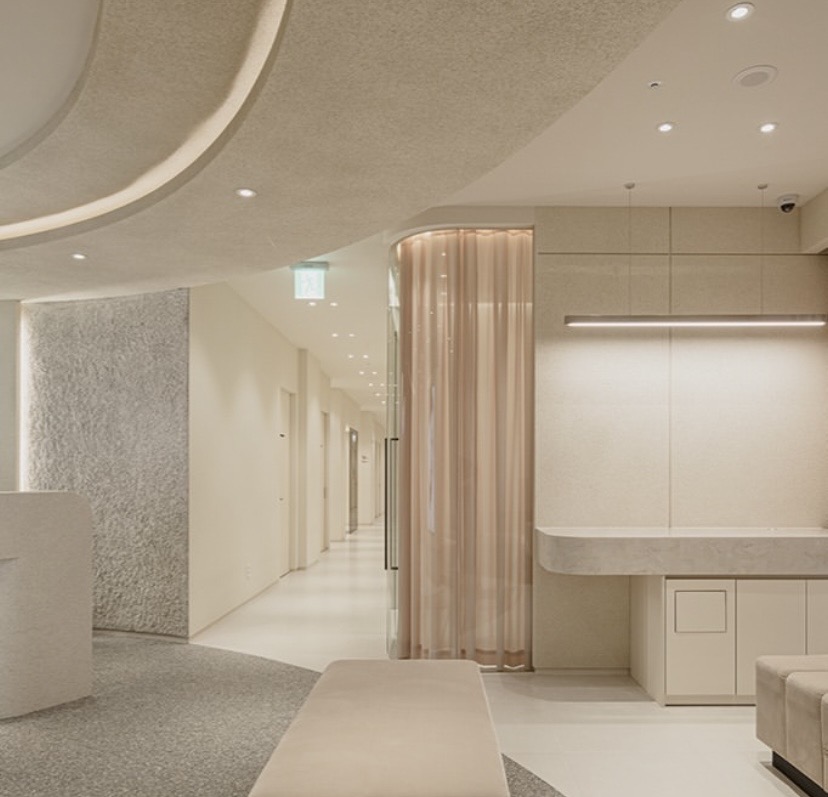
Located at 838 Nonhyeon-ro, Gangnam-gu, Seoul, Face Line offers a range of popular procedures including facial contouring, jaw realignment, eye and nose reshaping, facelifts, and fat transfer.
But if your goal is contouring or jaw shaping, what you really need to look at isn’t “it does it all,” but rather:
Is jawline contouring and double chin treatment one of its core medical specialties?
From the perspective of doctor specialization, this is quite clear:
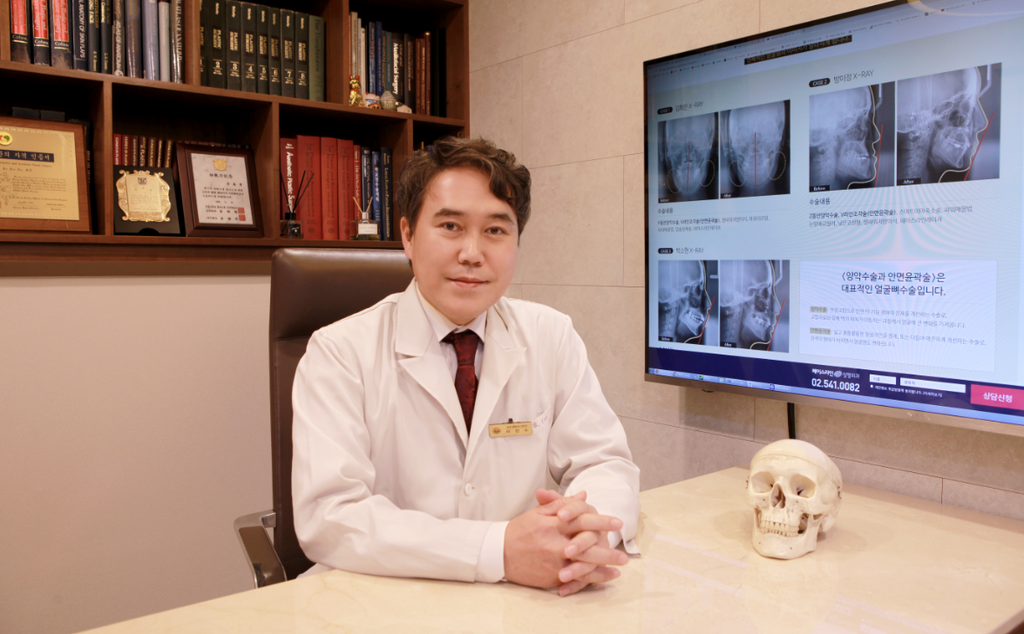
- Dr. Lee Jin-soo: Specializes in facial contouring, cheek augmentation, and jaw-related surgeries
- Dr. Lee Tae-hee: Specializes in surgeries such as eye treatments, nose reshaping, and SMAS lifting.
In other words, if you’re seeking Faceline treatment for cheekbones, jawline, V-line, double chin, skeletal protruding nose, underbite, or facial asymmetry, the option worth exploring in depth is Lee Jin-soo’s line.
This judgment is more useful than “Faceline is very famous.”
Because what you’re looking for isn’t a hospital that can do everything, but rather:
Does your surgical needs fall within the specialty focus of the key doctors at this hospital?
Book your appointment at Face Line Plastic Surgery in South Korea now!
🦴 What makes Dr. Lee Jin-soo worth visiting? Don’t just focus on “a smaller face”
One of the most common misconceptions about contouring surgery is:
“The doctor is amazing at bone reduction, so my face will definitely get smaller.”
Actually, it’s not.
Different positions of the cheekbones, jawline, and chin have a completely different impact on the final face shape.
Especially at the double chin level, what’s taken into consideration isn’t just “whether the face is wide” — it also includes:
- Position of the upper and lower jawbones
- occlusion
- Bony protruding nose
- underbite
- Chin area
- Side profile proportions
- Asymmetrical left and right
- Postoperative soft tissue changes
So when it comes to evaluating Lee Jin-soo, the truly valuable question isn’t:
“Is his bone reduction technique effective?”
Rather than:
“Will he first determine exactly which bone issue I have, rather than just adding all the contour options right away?”
This is the most crucial factor in determining whether to undergo jaw surgery.
📐 Is JSRO Dual Chin really the reason to choose Faceline?
The double chin treatment offered by Faceline includes the JSRO SMART double chin technology.
But if you simply use the four characters “JSRO” as the reason for choosing a clinic, that’s actually not enough.
Whether a technology truly has value depends on its ability to answer three key questions in the end:
What are my bone problems?
Why is it necessary to move in this way?
What changes occur to bite alignment and facial shape after moving?
For example, in the case of a patient with a bony protruding nose, if the goal is simply to make the mouth look less protruding, one should not focus solely on whether the mouth becomes less prominent.
Also check out:
- Is the relationship between the upper and lower jaws proper?
- Is the chin position well-proportioned?
- Is the ratio between the atrium and the lower court natural?
- Has the bite been improved?
- Has the side profile become more balanced?
So when you see JSRO, don’t rush to ask:
“Is this the latest technology?”
What we should ask instead is:
“What exactly has this planning approach done to solve my bone problems?”
Only by clearly explaining this issue can technology truly hold practical value.
🩻 X-RAY Reverse Calculation: What’s truly worth looking at isn’t the noun itself, but “how it’s calculated”
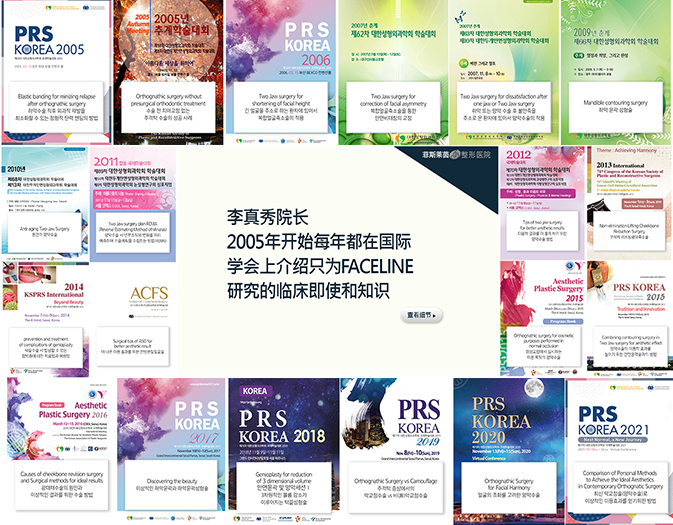
Another feature of Faceline that stands out is X-RAY reverse calculation.
But you need to stay calm here.
Just because there are X-rays and CT scans doesn’t mean the surgical outcome will necessarily be good.
Imaging tests are truly useful only when doctors can clearly explain the surgical approach based on the images.
For example:
What’s the main reason for my wide face?
Why is it recommended to get cheekbone augmentation instead of just chin angle correction?
Why should I get double chin surgery instead of just contouring?
Does the chin need to be moved?
If we skip one procedure, how much of a difference will it make to the face shape in the end?
Are my bite issues and facial shape problems caused by the same reason?
The true value of X-RAY planning lies in the doctor’s ability to explain each detail based on your images.
On the other hand, if you just have images taken and are then presented with a “three-piece/set” or “four-piece/set” package at the end, you really haven’t truly understood what the surgery entails.
Book your appointment at Face Line Plastic Surgery in South Korea now!
⭐ Reviews of Face Line Plastic Surgery in South Korea – Which “reliable reviews” should you actually check?
This is what I think is the most easily overlooked aspect.
Not all positive reviews carry decision-making weight.
For example:
“The scenery is beautiful.”
“The staff are very friendly.”
“The director is really handsome.”
These can certainly be used as references, but for a jaw and facial surgery that costs tens of millions of won, their value in helping with decision-making is actually quite low.
What’s truly worth your time to check out are the ones listed below.
① Has there been any improvement in bite alignment?
Double chin treatment isn’t just a simple cosmetic procedure.
If the patient already has a bony protruding nose, underbite, or significant occlusion issues, postoperative occlusal adaptation becomes a very important evaluation criterion.
When looking at case studies, prioritize finding:
Pre-surgery considerations → Surgical plan → Postoperative occlusion recovery
Instead of only looking at the front-facing photos.
② Does the face shape remain natural even after it “settles”?
There’s really no need to study a face 7 days after surgery that closely.
Early swelling can make the contours look completely different.
What’s even more valuable for reference is:
After 1 month, 3 months, or even longer.
Look:
- Chin line
- Symmetrical left and right
- Zygomatic bone proportion
- Chin area
- Side profile
- Soft tissue condition
These are much closer to the final result.
③ Is the swelling reduction really fast?
Don’t just ask:
“How long does it take for the swelling to go down?”
Because everyone’s surgical scope, physical condition, and recovery speed vary.
What truly matters to international patients is:
How long do I need to stay in South Korea?
When can I eat normally again?
When can I talk normally and go out?
When is a follow-up appointment needed?
What should you do if problems arise after returning to your home country?
These are more valuable for making decisions than “by which day will the swelling go down.”
😰 How can you tell if “sagging” — the biggest enemy of double chins and facial contours — is a problem?
Many people get contouring treatments because they want to make their faces look smaller.
But what you really should ask before surgery is:
“Is my face suitable for significant bone reduction?”
Because improving facial shape isn’t just a simple math problem.
If the reduction in bone size is significant, the soft tissues will also change accordingly.
So don’t just ask:
“How much can it be reduced?”
What we should ask instead is:
“If I shave off a little less, how much will it affect my face shape?”
You can even let doctors compare them directly:
Conservative approach vs. aggressive approach.
If the doctor is willing to clearly explain the differences between the two options, it will be easier for you to determine whether they are truly planning things for your best interest.
Book your appointment at Face Line Plastic Surgery in South Korea now!
💰 The price of Faceline can also help you make a judgment in reverse.
Current reference prices for overseas customers in 2026:
| Popular Procedures | Reference price |
|---|---|
| Lifting and Reduction Surgery Without Zygomatic Bone Removal | ₩10,000,000 |
| Long Curve Chin Angle | ₩9,500,000 |
| T-shaped chin / V-line chin | ₩7,800,000 |
| Contour Trio | ₩20,000,000 |
| Contour 4-Piece Set | ₩25,000,000 |
| Contour Repair | Starting from ₩18,000,000 |
| Basic Double Cheeks | ₩28,000,000 |
| Double Cheeks + Chin Angle | ₩32,000,000 |
| Asymmetric correction for double chin | ₩35,000,000 |
| Second Revision of Double Cheeks Surgery | Starting from ₩42,000,000 |
These prices are quite suitable for use in the first round of budget screening.
For example, if your budget is only around 10 million KRW, then double chin and contouring packages should naturally not be your top priority.
On the other hand, if your budget can cover around 25–35 million KRW, then what really needs to be compared is no longer just the price, but:
Doctors, treatment plans, technical logic, and post-operative care.
Additionally, the reference price does not represent the final amount to be paid. Costs for CT/X-ray scans, hospital stays, medications, and additional personal items may be charged separately, with the actual fee ultimately determined based on the hospital’s assessment.
⚖️ Who is Faceline suitable for? This is more important than “is it worth it”?
If this fits your needs, you can add Faceline to your shortlist.
- The cheekbones are quite prominent.
- The jawline is noticeably wide.
- Unproportional chin shape
- Want to improve my overall V-line silhouette
- bony protruding nose
- underbite
- Asymmetrical face from side to side
- Want to evaluate both the profile and bite at the same time
- I had contouring done before, and now I need it repaired.
But if you just simply want your face to be smaller
I’d actually suggest you not rush into getting the four-piece set just yet.
If your face appears larger, it might be due to:
Bones + Masseter + Fat + Soft tissues + Proportions.
If the real issue isn’t related to the bones, performing a large-scale Osteotomy right away may not be the most sensible approach.
So the most important thing to say during a in-person consultation is actually:
“If I only address the areas where I really have problems, what’s the minimum I need to do?”
This sentence is much more useful than “I want to get the four-piece set.”
🔎 If I were you, this is how I’d verify Faceline.
When it’s time for the in-person consultation, don’t just sit there listening to the doctor’s recommendations.
Ask directly:
1. Which part of my face is mainly responsible for its width?
2. If only the contour is done instead of double chin treatment, how much can it address?
3. If getting double chin surgery, what does it mainly help improve—bite alignment, protruding nose, or facial shape?
4. Why should I get the three-piece/set or four-piece/set?
5. Which parts can actually be skipped?
6. How much is the bone expected to be moved or removed?
7. How is postoperative occlusion and mouth opening recovery typically managed?
8. I’m a patient from abroad – how should I handle post-operative follow-up after returning home?
Out of all of them, I highly recommend you ask question 5:
“Which parts can actually be skipped?”
Because this helps you determine whether the doctor is “solving your problem” or “piling on procedures.”
Book your appointment at Face Line Plastic Surgery in South Korea now!
🧠 So, what’s the real verdict on Face Line plastic surgery in South Korea?
If I were to consider this hospital for an actual surgical decision, I wouldn’t just give you a simple answer:
“It’s worth going.”
A more accurate way to put it is:
If your goal is jawline refinement + double chin reduction
Faceline deserves a spot on your in-person consultation shortlist.
It’s not simply because “South Korea is famous for cosmetic surgery,” but rather its current division of responsibilities among doctors and the publicly available procedures indeed align closely with the growing demand for treatments related to facial contours, cheeks, and jaw structure.
If you mainly want to focus on eye and nose procedures
So the focus of evaluation should be on Director Lee Tae-hee, rather than judging the entire hospital based on Lee Jin-soo’s expertise in double chin treatments.
If you just want to slim down your face simply
Don’t rush to decide on the four-piece set just yet.
First, figure that out:
Is it a bone issue, or a problem with muscles, fat, and soft tissues?
If you’re a patient from abroad
In addition to the pre-operative results, you also need to consider:
Time spent in Korea + post-surgery follow-up visit + follow-up after returning home
Include it in the decision-making process.
📌 Final sentence
A truly valuable **“Review of Face Line Plastic Surgery in South Korea”** isn’t just one that lists both the positive and negative reviews.
but to make you understand after reading it:
Is Faceline the hospital you’re looking for?
Is Lee Jin-soo the doctor you’re looking for?
It’s worth wondering whether the JSRO and X-RAY reverse calculations you see can actually be verified during an in-person consultation.
And most importantly:
Is this surgical option actually solving your problem, or is it just adding more procedures to your list?
It’s much more useful to clarify these questions before deciding whether to proceed, rather than simply relying on what “netizens say about the great results.”
📅 How to Make an Appointment at Face Line Plastic Surgery in South Korea
Path A: Direct via WeChat
Add us on WeChat: s-sourire
Appointment Note: Appointment at Face Line Plastic Surgery in South Korea / Dr. Jin-soo Lee
One-on-one pre-surgery consultations are available in advance to confirm the director’s schedule, learn about promotional offers, and Chinese translation and accompaniment are provided.
Path B: BeautsGO
WeChat search: BeautsGO
Once you’re in the mini-program, just search for “Faceline” or “Face Line”.
You can view project details, price references, and booking options on the platform. All content on this site adheres to the principle of helping you avoid pitfalls in medical aesthetics treatments. For more details, please check our About page.
🔗 Want to learn more about Face Line plastic surgery in South Korea?
Book your appointment at Face Line Plastic Surgery in South Korea now!