
It’s been almost three weeks since I returned from the treatment. My skin condition has stabilized completely, so it’s time for me to write this in-depth review of V&MJ skin’s Dermatology department in South Korea, which I’ve been putting off for so long. To be honest, before I went, I read many reviews, but most of them were highly biased. In this review, I will share my true feelings, including both the advantages and disadvantages.
Why choose VMJ Dermatology? (The process of comparing it with the other two options)
When I went to Seoul this time, I was actually considering three options: V&MJ Skin in South Korea, a nearby clinic called Dermalog, and the more well-known Laravie Clinic. I ultimately chose V&MJ Skin for three main reasons.
Firstly, when searching for “South Korea V&MJ skin Dermatology” on Dcard, almost all the reviews are from customers from Taiwan. Moreover, the comment section includes real photos for comparison, rather than just text alone. I couldn’t find any Chinese reviews regarding Dermalog, while the evaluations for Laravie are quite polarized – some people say it’s very good, while others find its promotional efforts annoying.
Secondly, VMJ’s Instagram has a series called “The Dean’s Medical Treatment Diary,” which records the special cases treated during that week. After watching the content for three months, I felt that the dean was truly sharing his technical expertise, rather than just posting pretty photos.
Thirdly, the price. I compared the quotes for hyaluronic acid injections from three different providers. At V&MJ skin in South Korea, the PDRN hyaluronic acid injection costs 280,000 South Korean won (approximately NT$7,560); Laravie charges 400,000 South Korean won, while Dermalog has not disclosed its price, so it requires further consultation to find out. Since the cost of this same treatment is nearly 30% lower at V&MJ skin, and given that their reviews are also positive, I decided to give it a try.
Free consultation · Traditional Chinese language service · Quick reservation
Actual measurements of the environment at VMJ Dermatology Clinic
The clinic is located in Sinsa-dong, and it takes about 8 minutes to walk from Sinsa subway station. I made an appointment for 2 p.m. on a weekday afternoon, and after arriving, I waited for about 10 minutes before being called inside.
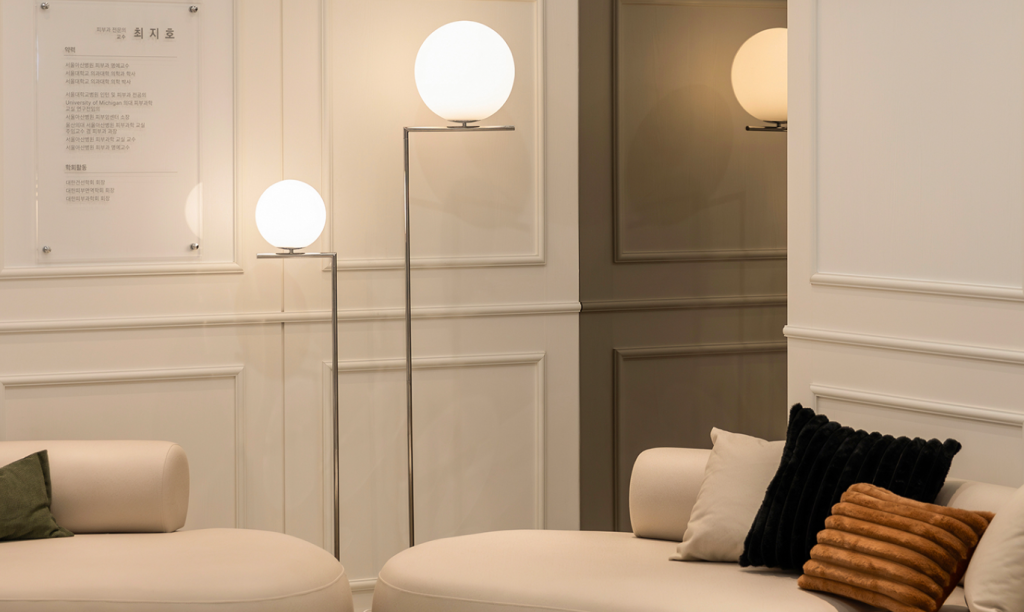
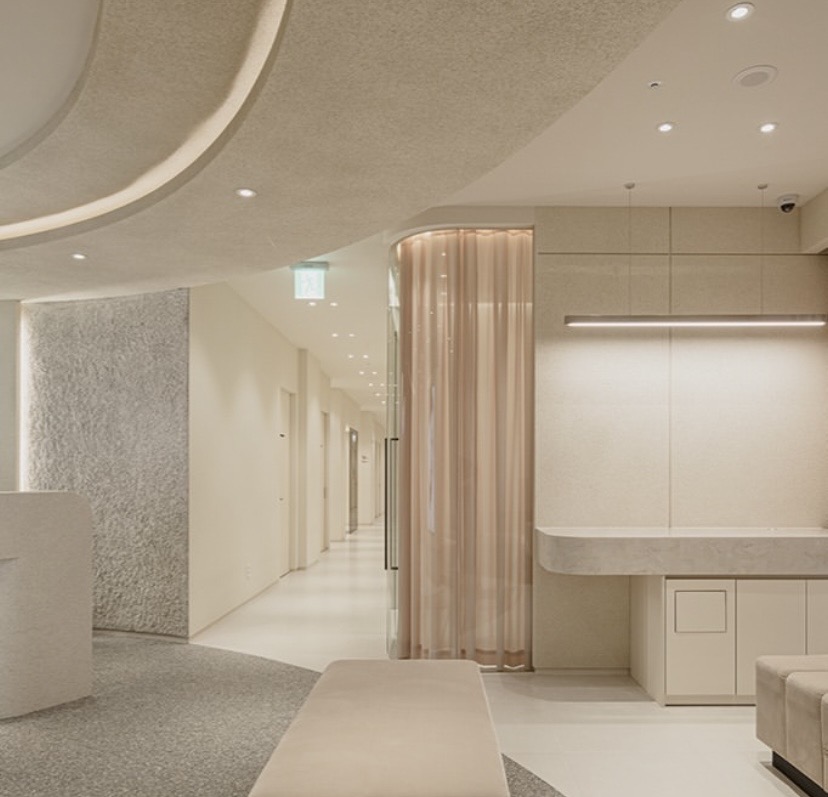
The space is not very large, but overall, it feels clean and tastefully designed. The waiting area can accommodate about six people, and drinks are available for guests to grab themselves; I remember there was soda water and warm honey water. At the front desk, there is an assistant who speaks English. When I entered and said, “I have a reservation; I’m from Taiwan,” she immediately switched to Chinese. Although her Chinese isn’t very fluent, it was sufficient for our communication.
The consultation room is a private booth. Upon entering, there was a skin testing device. The assistant took several photos of my facial condition before the director came in. I really like this process – it doesn’t start with immediately offering treatment options as soon as you enter, but rather by first assessing the condition of your skin.
The treatment room is separated from the waiting area. During my treatment, I am always treated on a one-on-one basis, with no interruptions at all, and a nurse accompanies me throughout the entire process. The entire space is free from any unpleasant odors, and the lighting is warm and white, so it does not create a sense of pressure.
The consultation process with VMJ Dermatology’s Dean (the part that touched me the most)
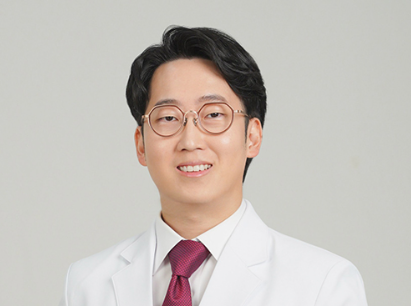
The director is a female doctor who appears to be in her forties. She primarily speaks Korean, and later on, I communicated with her through the assistance of an interpreter and by typing on my phone. There was one gesture she made during our consultation that left a deep impression on me: she took a small ruler and measured the distances between several points on my face, explaining that she was checking the proportions of my facial features and determining the areas that needed improvement.
I originally wanted to have Thermage treatment, but after the director examined my skin condition, she said that my skin didn’t actually require Thermage yet and suggested that I start with PDRN hyaluronic acid injections as a foundation. She suggested that we re-evaluate the need for Thermage after half a year. Instead of trying to make me spend more money, she simply recommended a more affordable option. Such honesty is not common in many clinics, so I decided right there and then to trust her.
The consultation took approximately 35 minutes, which is considered quite slow and thorough in Seoul. Later, she also checked the condition of my Nasolabial Fold Correction and said that there was no need for any treatment at present, but she advised me to return to Taiwan and take better sun protection measures, as inadequate sun protection could cause these lines to appear earlier. All these suggestions were given freely, without any intent to promote any products.
Free consultation · Traditional Chinese language service · Quick reservation
The entire experience of the PDRN hyaluronic acid injection treatment process
After deciding to undergo the PDRN hyaluronic acid injection, the assistant took me to wait for about 15 minutes so that the anesthetic could take effect. I generally have a low tolerance to injections, but after applying the anesthetic, I hardly felt anything at all. At most, I felt my skin being pushed slightly when the device was inserted, but it wasn’t painful at all.
The entire treatment takes approximately 20 minutes, and it is performed by the director himself, rather than a nurse. I paid special attention to this detail because previously, a friend of mine went to another clinic where they claimed the treatment would be done by the director, but in reality, it was carried out by a nurse. This time, at V&MJ skin in South Korea, the entire procedure was performed by the director himself.
After the procedure, my face turned a bit red, so the assistant applied a calming mask to it. After about 20 minutes, the redness had subsided significantly. She reminded me not to wear makeup that day, to avoid hot water, and to refrain from strenuous exercise. She also gave me a sheet detailing post-treatment precautions (even in Chinese!) – this little attention really showed that they truly care about the needs of their Taiwanese clients.
Postoperative recovery timeline (actual situation)
Day 1: The face is red, with tiny pinholes; it’s necessary to wear a mask when going out. There is no swelling, but the skin feels a bit tight to the touch. When washing the face in the evening, use warm water to gently cleanse the area without any stinging sensations.
Day 3: The redness had subsided, and the needle holes were almost invisible. My face began to have a shiny appearance; my friends said my complexion looked much better, but at that time, I wasn’t sure whether it was actually due to the treatment or just a psychological effect.
Day 7: It’s clear that it’s effective. The Pores seem smaller, and the makeup looks much better. The foundation applies smoothly without the need for any base layer. The time taken to apply makeup has been reduced by nearly half.
Day 14: This should be the time when the effects are most noticeable. The skin’s moisture retention has significantly improved, the contours of the face appear clearer, and the areas on both cheeks that were previously a bit rough now feel very smooth to the touch.
Day 21: The effects remain stable, with no signs of regression. The director mentioned that to maintain the benefits of PDRN, it is recommended to receive treatment every 3–4 months. I currently plan to go to Seoul again next time to get another session.
A comprehensive summary of the actual advantages and disadvantages (not applicable to non-professionals)
Advantages:
- The dean personally provides consultations and performs the injections himself, without outsourcing these tasks to nurses.
- No sales pitches; instead, they would say, “You don’t need to do this.”
- There are Chinese-language post-operative instructions, which are very user-friendly for Taiwanese customers.
- The prices are relatively low compared to other clinics in the same industry, offering great value for money.
- The postoperative sedation management was done exceptionally well, ensuring that no one left with any discomfort or embarrassment
Disadvantages (real ones):
- My Chinese communication skills are not very fluent, so I rely on translation apps when dealing with complex issues.
- The clinic space is relatively small; it doesn’t have that luxurious, grand lobby style, so some people might not be accustomed to it.
- Reservations must be made at least 2 weeks in advance; it is very difficult to secure a spot during peak periods on short notice.
- There are no male doctors on-site; if you wish to have the male director perform the procedure, you can skip this option.
Reference prices for VMJ Dermatology in South Korea (updated in 2026)
| Treatment regimen | Korean won | Approximately NTD | Remarks |
|---|---|---|---|
| PDRN hyaluronic acid injections | Starting from 280,000 yuan | Approximately 7,560 | The dean administered the injection himself. |
| Botox for facial slimming (imported) | Starting from 250,000 yuan | Approximately 6,750 | This includes the consultation fee. |
| Pico laser treatment for the entire face | Starting from 350,000 yuan | Approximately 9,450 | Adjust according to the condition of your skin |
| Basic skin care | Starting from 120,000 yuan | Approximately 3,240 | Includes cleansing and introduction steps. |
| Introduction of Asce+ Exosomes | Starting from 400,000 yuan | Approximately 10,800 | For postoperative restoration |
The above prices are merely references I obtained during my actual consultations. The actual fees may vary depending on an individual’s specific circumstances and the treatment plan offered by the clinic on that day. It is recommended to confirm the latest prices directly when making an appointment. Overall, the charges at V&MJ skin’s Dermatology department in Sinsa can be considered fair and transparent; no additional hidden fees have been incurred.
Free consultation · Traditional Chinese language service · Quick reservation
In conclusion: Is it worth it?
The answer is definitely yes. V&MJ skin’s Dermatology department is not the kind of clinic that attracts internet celebrities just for its luxurious decor, designed to inspire people to take photos and share them on social media. However, the professionalism of its doctors and their approach of avoiding unnecessary sales pitches are what I liked most among several clinics I visited in Seoul. If this is your first time considering medical aesthetics treatments in South Korea and you’re looking for a doctor who will tell you the truth, V&MJ skin should definitely be on your shortlist.
How to make an appointment at VMJ Dermatology
If you still have questions after reading this, or if you would like to make an appointment with VMJ Dermatology, you can contact us in the following two ways. Consulting in advance is more convenient than waiting on-site, and it also helps you avoid schedule conflicts:
Method 1: WeChat consultation (the fastest way)
Scan the QR code below to add me on WeChat: s-sourire

After adding this information and sending a message in the format of “VMJ Dermatology + desired treatment + preferred date”, the customer service usually responds within a few hours to provide you with the latest schedule information and promotional offers, which is much faster than searching on the official website yourself.
Method 2: The BeautsGO platform (suitable for beginners)
BeautsGO is a South Korea-based medical beauty booking platform that specializes in serving customers from Hong Kong, Macau, and Taiwan. I highly recommend using this service if you are planning to undergo medical beauty treatments in South Korea for the first time.
- Chinese customer service provides full support throughout the process, from making the appointment to the post-operative care. Someone is always available to assist customers at every stage.
- With transparent prices and the platform helping you compare rates, there’s no need to worry about being charged tourist prices.
- Reservation guarantee: If the appointment time at the clinic needs to be changed temporarily, the platform will help you coordinate the arrangements.
- For post-operative follow-ups, if you encounter any issues after returning to Taiwan/Hong Kong, feel free to ask for assistance.

Kind reminder: It is recommended to make an appointment at least 2 weeks in advance. VMJ Dermatology is particularly popular during weekends, and it becomes even harder to get a reservation around holidays. So act early to avoid any regrets.