“My face was in terrible condition for three months. I visited four different Dermatology clinics in Taiwan, but none of them were able to help me. Finally, at a small clinic in Myeongdong that didn’t even have a Chinese signboard, Director Cui identified the problem in just one visit.”
If you have sensitive skin or are a severe case in need of facial repair treatments, you must understand that feeling of despair—“Having seen five doctors, undergone eight different treatments, spent tens of thousands of dollars, only to see my condition get worse instead.” It was at that lowest point that a friend from South Korea recommended I visit KARIN Clinic. At that time, my face was red, swollen, and peeling; I even had to wear a mask whenever I went out, and my friends were shocked whenever they saw me.
My experience in Taiwan was completely different. Dr. Cui didn’t tell me to “stop using all skincare products first and then observe the results.” Instead, after examining my skin under a dermatoscope for five minutes, he said, “Your problem isn’t sensitivity; it’s micro-inflammation within the skin’s barrier layer. The previous laser treatments you received were too superficial, so the inflammation couldn’t be addressed.” That one sentence enlightened me. It turned out that the four “reparative laser treatments” I had undergone in Taiwan were only superficial treatments and did nothing to address the underlying inflammation—which was why the symptoms would recur a week after each treatment. Dr. Cui also told me that many clinics in Taiwan use only a 1550nm wavelength for reparative laser treatments, and the energy levels used are relatively conservative, making these treatments almost ineffective against deep-seated inflammation.
🏥 KARIN Clinic Myeongdong: Why should people with sensitive skin consult Dr. Choi?
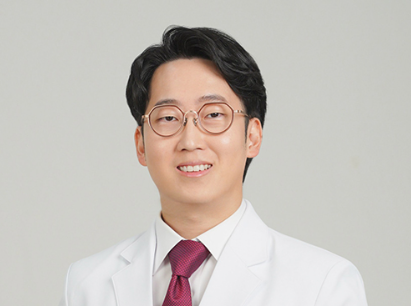
KARIN Clinic is located on the 4th floor of the Seorim Building in Myeongdong. Although it doesn’t occupy a prime location on the ground floor, it enjoys an excellent reputation among South Korea’s community of people with sensitive skin. Director Choi is a specialist in Dermatology who has focused on barrier repair for over 15 years; many South Korean beauty YouTubers choose KARIN as their first option after experiencing skin problems. Although the clinic is small, its equipment is very modern—in 2024, it was upgraded with the latest dermoscopy system, which can detect the distribution of microvessels beneath the dermis. When I visited, I encountered two South Korean women in the waiting area: one was the owner of a cosmetics brand, and the other was a model. Both of them came to see Director Choi because their skin barriers had been damaged due to long-term use of makeup.
Compared with the prices mentioned by KARIN clinic in Myeongdong, Dr. Choi’s Barrier Repair Laser treatment costs ₩250,000, which is actually cheaper than the “Basic Laser Package” offered by the chain stores in Myeongdong – yet the technical quality is completely different. Dr. Choi uses a 1927nm fractional repair laser, not the kind of low-cost laser that only performs superficial treatments on the entire face. The 1927nm wavelength allows for precise targeting of the barrier zone between the dermis and epidermis, enabling the removal of damaged tissue while stimulating the production of new Collagen.
📋 How to Make an Appointment at KARIN Clinic (Complete Guide)
Step 1: Online reservation
The most recommended way is to make an appointment through WeChat or BeautsGO. Add WeChat user s-sourire and inform them that you would like to schedule a treatment with Dr. Cui KarIN for barrier repair laser therapy. s-sourire will help you confirm the available schedule, translate the pre-treatment questionnaire, and even arrange transportation for you on the day of the appointment. The entire process can be communicated in Chinese without any obstacles. My clinic in Myeongdong is absolutely a must-visit place! The reservation process at LIJIN clinic in Myeongdong is also described in detail in the link provided; it is basically the same.
Or use the BeautsGO mini-program: search for “BeautsGO” on WeChat, enter “KARIN Clinic” to make a reservation directly, and enjoy transparent price comparisons, platform-exclusive discounts, and a dedicated green channel for verification.
Step 2: Pre-operative consultation (free of charge)
Upon arriving at the clinic, Director Cui will first conduct a thorough examination using a dermoscope, which takes approximately 15 minutes. The examination includes tests for skin moisture levels, analysis of the barrier function of the skin, identification of inflamed areas, and mapping of the distribution of capillaries. After the examination, a report will be printed out, detailing the severity of each issue in the affected areas (rated on a scale of 1 to 5). Throughout the process, Director Cui will explain the results while viewing the screen: “The red color in this area indicates inflammation; the blue line shows microvascular dilation; the darkened area indicates pigmentation”—even those with no medical background can easily understand these explanations. Based on the examination results, a treatment plan will then be recommended.
The results of my in-person consultation that day were as follows: there was deep-level inflammation on the left cheek (grade 4), the barrier function in the T-zone had weakened (grade 3), and the capillaries on both cheeks had dilated (grade 2). Director Cui recommended a combination of barrier-restoring laser treatment and Juvelook Collagen injections, costing a total of ₩630,000. However, since my condition did not require full-face Juvelook treatment, I ultimately only opted for the laser procedure, which cost ₩250,000. Director Cui also said, “We need to first reduce the inflammation before proceeding with any other treatments; otherwise, random injection of fillers might only worsen the inflammation.”
Step 3: The treatment process
The process of using the barrier repair laser takes approximately 40 minutes: First, an anesthetic ointment is applied for 30 minutes. Then, Director Cui personally operates the laser, targeting the inflamed areas in multiple layers. Director Cui’s technique is extremely precise—he will place the laser head on the skin for two seconds to confirm the exact location before emitting the beam. After treating each area, a cold air fan is used to cool down the skin and reduce the risk of heat damage. Throughout the entire process, Director Cui continuously murmurs in Korean, saying things like “It’s okay, it will be fine soon.” Although we couldn’t understand the language, his soothing tone was very effective. The pain level is roughly comparable to that of a rubber band snapping, making it much milder than Pico laser treatment. After the procedure, applying a repair mask for 20 minutes before leaving is sufficient.
💬 Reactions and recovery period after treatment
On the same day after the treatment: my face was slightly red, and there was a slight peeling sensation, similar to the effect of mild sunburn. Director Cui prescribed a repair cream and sunscreen, and also advised me to only wash my face with warm water within three days. He also gave me a box of oral anti-inflammatory medication to prevent infection. This was completely different from my experience in Taiwan, where my skin darkened a week after the laser treatment. In this case, the redness subsided by the third day, and the peeling stopped by the fifth day. What surprised me the most was that the redness across my entire face had already reduced significantly after just the first laser treatment, making me look much healthier.
A week later during the follow-up appointment, Director Cui confirmed via dermoscopy that the inflammation had subsided by 80% and recommended another treatment to consolidate the results. The cost for the second session remained the same: ₩250,000—there was no hidden increase just because I was a repeat customer. After the two treatments, my severe skin problems were virtually completely resolved. The discomfort caused by any skincare products had disappeared, and my makeup no longer clung to my skin.
Later, I underwent another Juvelook Collagen injection for ₩380,000 – this time to address the fine lines and dullness that had appeared after my skin barrier was damaged. Dr. Cui advised me to wait until my skin barrier had fully stabilized before proceeding with any filling treatments, which is quite different from the approach of many clinics that offer such procedures immediately upon consultation. The Juvelook formula contains Polycaprolactone (PCL) microspheres, which are slowly released into the dermis after injection, continuously stimulating the production of new Collagen and providing effects that last for over a year. Dr. Cui also recommended combining this treatment with Asce+ Exosomes to further accelerate the recovery process. After the procedure, my skin became incredibly smooth, and my makeup applied without any caking or cracking.
🔬 A must-read for those with sensitive skin: Director Cui’s “Three-Stage Repair Method”
Director Cui has developed his own unique “three-stage repair method” for the treatment of sensitive skin. During the consultation, he explained in detail the purpose of each stage.
- First stage: Calming and anti-inflammatory treatment (1–2 sessions). Use the 1927nm fractional repair laser to eliminate deep-level inflammation, and simultaneously use LDM hydrotonic therapy to deliver calming ingredients such as neurotransmitters and panthenol. The focus of this stage is to “prevent further skin irritation first”.
- Phase 2: Barrier reconstruction (2–3 sessions). Potenza is used to create micro-channels in the dermis, allowing repair ingredients to penetrate deeply. Dr. Cui will adjust the depth and density of the Potenza treatments based on the extent of your barrier damage.
- Third stage: Function enhancement (1–2 treatments). Utilize Juvelook Collagen injections or Asce+ Exosomes to enhance the skin’s natural repair capabilities and defense mechanisms. By this stage, the skin has essentially returned to a healthy state.
It took me a total of three months and four trips to Seoul to complete the process from the first to the third phase. Although this wasn’t a short period of time, Director Choi made it very clear: “Restoring sensitive skin cannot be rushed; each treatment must wait for the results of the previous one before deciding on the next step.” This method, although slower, yields very lasting results. If you need help repairing the damage caused by failed cosmetic procedures, you may want to refer to the reviews of Renovo Skin Clinic, which also mention this similar approach of “restoring the skin first before moving on to more advanced treatments.”
⚠️ Important Notes for Reservations with KARIN
- Director Cui is available for consultations from Monday to Friday, and only on Saturdays for half a day. It is recommended to make appointments during weekdays.
- The first consultation is free of charge, but the decision whether to proceed with laser treatment must be made on the same day.
- If you have previously undergone laser treatment for dark spots, please inform Director Cui in advance; he will adjust the energy settings accordingly.
- The clinic does not provide translation services. If you have language barriers, it is recommended to arrange for someone to accompany you through S-Sourire.
- Three days before the procedure, avoid using products containing acidic ingredients, retinoic acid, retinol, or other irritating substances.
- Avoid saunas, swimming, and strenuous exercise within one week after the laser treatment.
- During the recovery period, it is essential to use sunscreen with an SPF of 50+ or higher. Director Cui will recommend sunscreen products suitable for sensitive skin.
- It is recommended to use the soothing spray once in the morning, once at noon, and once in the evening for one week after the procedure to help reduce redness and provide soothing effects.
- If you visit Seoul in winter, be aware of the irritation that the alternating effects of cold outdoor air and warm indoor heating can cause to sensitive skin.
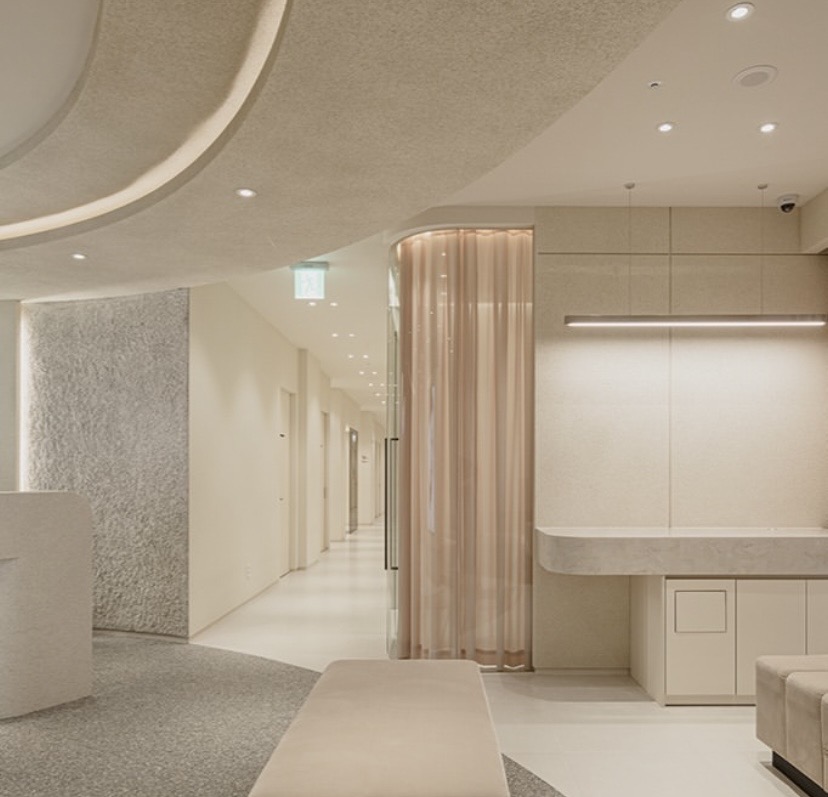
One last thing: What touched me most about KARIN was their commitment to sticking with the same doctor throughout the treatment. Many clinics will suggest changing doctors or clinics after one or two sessions if there is no improvement, but Dr. Choi follows up on your entire treatment process, using data from dermoscopy reports to show you how things are progressing at each follow-up visit. For patients with severe skin problems, this sense of reliability is far more important than the cost. Moreover, Dr. Choi’s clinic is very clean and quiet, free from the noisy music and promotional broadcasts commonly found in Myeongdong clinics, creating a relaxing atmosphere from the moment you enter. If you are also suffering from severe skin issues, I truly recommend that you talk to Dr. Choi—at least for a free initial consultation. You will find that sensitive skin is not an incurable condition; it just requires the right approach.
![[Seoul Dermatology Appointments] Lumiin Dermatology: 2% discount for in-person consultations at specialized hospitals; detailed address and Chinese-language consultation services available.](https://koreanclinic.cceeo.com/wp-content/uploads/2026/01/Lumei-Skin-Clinic-1024x612.png "[Seoul Dermatology Appointments] Lumiin Dermatology: 2% discount for in-person consultations at specialized hospitals; detailed address and Chinese-language consultation services available.缩略图")